Brazilian Jazz Carnival in Berlin

Music

Two years have passed in an Augenblick (like Germans like to define “the time that flies”) since I have moved to Berlin. I would lie, if I said I don’t miss Barcelona, Brazil, Portugal and my hometown Poznan from time to time. Travelling is relatively cheap and easy these days, at least to some of these locations though, so I don’t happen to be homesick too often to be honest.

Especially that I feel very happy where I am now, both personally, and professionally, and Berlin keeps surprising me every day with its amazing cultural offer. I even realised how I can cope best with the dark and cold days throughout roughly half of the year. Concerts and dancing are among my most powerful weapons!

It is also fair to say, that during these two years, I have met amazing people from all over the world sharing my passions and at the same time showing new perspectives, opening my mind and enriching my life.

More importantly, I keep speaking Portuguese. Be it at work with my Portuguese-speaking colleagues (or those wanting to simply learn and practice!), be it with my good old or newly acquired friends. Berlin has an incredible offer of Latin American movie festivals as well as concerts of all the music genres,  out of which I happened to see two of my Brazilian jazz gurus this year already.

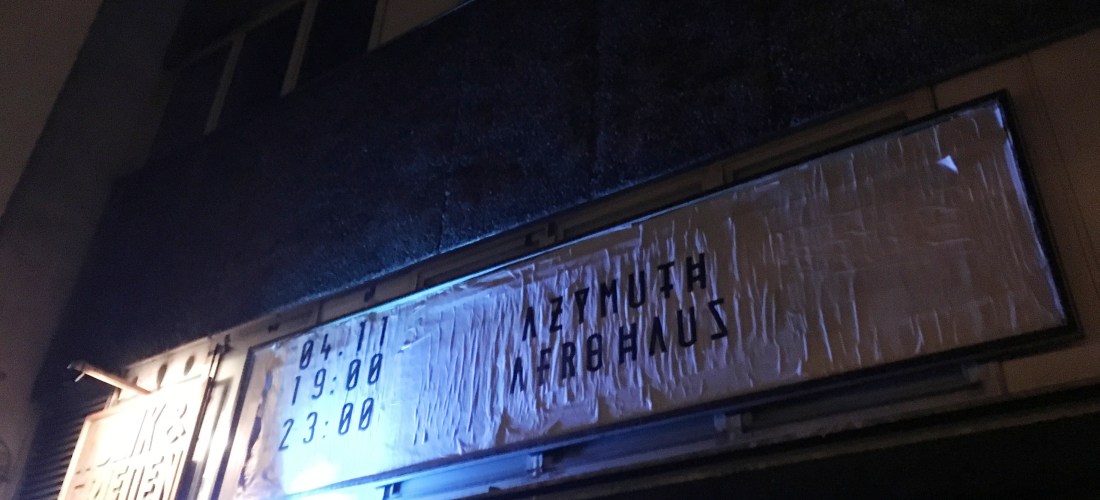
I am very honoured to have seen Ed Motta earlier this year, and Azymuth trio only yesterday. There are very few artists which inspired so many DJs and producers much as they did. Actually, I can’t think of any dancefloor which wouldn’t go crazy if a DJ dropped ‘Jazz Carnival’, regardless of the location. As a consequence, their tracks have been often remixed and incorporated into legendary mixes. I was hoping to see them live for a very long time, especially when I noticed that they were featured at the Boiler Room session and announced their European tour.

A thought that occurred to me yesterday, was about the universal and timeless aspect of music. Even though Azymuth members could be my grandparents, and most of their tracks are much more older than I am, their sound is moving the crowds to a state of frantic trance.

Muito obrigada, Maestros and long live Brazilian jazz!

Nascer do sol – Portuguese encounters in Japan

Music, Travel

I am happy to say that I spent the majority of this month in amazing Japan. I have dreamt about this trip for a long time and it has finally come true. Great part of it was dedicated to some musical research, as I knew that Japan is great source of digging the vinyl shelves and a lot of the DJs and producers I respect researched quite a lot on the streets of Tokyo, Kyoto or Osaka.

I was always very intrigued by the fact that there is so much Portuguese speakers living in Japan. Partly, this may be due to massive immigration of Brazilian nationals to industrial cities like Nagoya, and the other way round a lot of Japanese migrating to Brazil. Actually, my first encounter with the Japanese culture was in 2013 in Liberdade, São Paulo’s district, home of thousands of Japanese descendants. Yes, I got to use the famous Japanese toilet ToTo there! But speaking seriously, I discovered Portuguese influences in Japanese music early when I discovered new jazz producers in the early 2000s, to name a few: Hajime Yoshizawa, or Kyoto Jazz Massive which I would like to list as sources of my inspiration.

There are influences reaching fur beyond music. While visiting the city of Nagasaki, I learned that for years, it has been an important port for various sailors from the European countries, to name the Dutch, the Spanish and the Portuguese on the far East. After the Portuguese, a sweet memory was left: a sponge cake called Castella

Finally, during my trip I got to know pretty amazing Japanese people interested in music: from Detroit techno, through soulful hip-hop up to exotic influences of music of Cabo Verde. It is hard to summarise the variety of all these encounters in one blog post, but I wanted to encourage everyone to discover the country through the sound and multicultural influences. And even if the country of the Rising Sun is one of the most remote and isolated places, it’s full of contrasts, inspirations and definitely is a great place to discover new music styles.


Stay True – Boiler Room in Portugal

Music

In my last post I mentioned a lot about how Afrolusobrasilian culture is present in Lisbon. You may also have noticed that I am getting regularly inspired by the Portuguese capital when it comes to sound searching.

I am very happy to confirm that in September I’ll be visiting LISB:ON festival, where I will have a chance to see Brazilian artists like Marcos Valle or Azymuth, not so easy to spot at the concerts these days. This festival, being a part of a summer project called Jardim Sonoro (pt. Sound Garden), will also attract other ambitious electronic music producers such as Matthew Herbert or Dixon, and here is why I would like to dedicate a short paragraph to electronic music in Portugal.

Since currently I’ve been living in Berlin where electronic music can be heard even in grocery shop, no other place on Earth can compete with DJ line ups and a density of EDM producers per square km. However, world can definitely be grateful to Lisboa – Luanda connection for bringing in some truly crazy rhythms to the dancefloors.

Lately, I have taken part in the music production showcase with Dengue Dengue Dengue who were also hosted by the local Boiler Room edition Stay True. More of the inspirational sounds can be seen from its archive:

Stay True: Portugal edition took place a month ago and besides the Dengue Dengue Dengue duo hosted Buraka Som Sistema as well as DJ Marky  whose Boiler Room back in Brazil is already unforgettable classic of its kind.

I am definitely looking forward to re-discovering Lisbon (I can do it anytime anyway at anytime) at my own bpm pace, simply enjoying the musical and cultural diversity.

I hope that thanks to the initiatives like Stay True this city will get even more visibility for the music aficionados.


Badu is always comin’ for real

Music, Travel

This is not a post about Erykah Badu’s new mix. Badu is a creole name for the people of the biggest island of the Cape Verde archipelago: Santiago, and to them I would like to dedicate this post.

Crowd, chaos, waiting: in three words that could summarize pre-Christmas time at the arrivals lounge of the Nelson Mandela Airport in the capital of Cape Verde, Praia. The guards, customs and military at the airport mingle so much that it is not that easy to distinguish who is working there and who is ‘just chillin’. I still have a lot to learn: but beyond words and gestures I catch the first meanings of morabeza, famous hospitality and relaxed attitude of Cape Verdeans. On the top of that, my luggage is lost, but oh well, after 2 hours of waiting for visa stamp that does not even surprises me.

What surprises me though is that the owner of the apartment I briefly spoke over e-mail, waits patiently in the arrival lounge though and shows no trace of being nervous, or upset after over 3 hours of waiting. He took this time to chat with some other people waiting over a midnight coffee. On the way we take some other people, just for the sake that they’ve been heading the same direction, no matter that it’s long after midnight. Even though I am tired like never before, I am so happy it’s 3 am and the temperature is over 25 degrees. And I slowly see some logic in the what I defined as chaos.
After I wake up and have a breakfast with my beloved mangoes and papaias, I head to the biggest market of Praia: Sucupira to get some ‘essentials’ that were left behind in my registered luggage. Sucupira is a labirynth where you can get anything from chinelos (aka ‘Havaianas’) to running piglets. Not surprisingly, clothes are rather expensive: as there is close to nothing produced in Cabo Verde, most of them come from Paris where, according to the estimations, there is the biggest diaspora of caboverdianos. Next to bikinis, there are figures of black Jesus and black Maria, someone fries chicken wings in piri-piri and the sounds of funana are all over the place.
I leave Sucupira to find some quiet shelter in the uptown district Plateau, historically second settlement in West Africa after Cidade Velha which I will describe in the forthcoming posts. There, in a bar 5al da Musica I take a musical tour through the history of Cabo Verde: from B’Leza to Sara Tavares. And in the meantime, visiting musician from Angola and Lisbon practice their evening jam… I get goosebumps while hearing the fresh sounds and inspirations I would never hear about in Berlin. And so my first 24h in Praia are gone, I order my last coffee, chat with the musicians feeling very balanced, inspired and happy, almost like Bad’u. 
Si ka badu ka ta biradu!

Téra Lonji – a distant land

Music, Travel

Tired of the 2015: corporate year end’s closure, and pointless rush around Christmas festivities in Berlin, I am counting days to teleport myself to a very distant and different place: Cape Verde’s (port. Cabo Verde) island of Santiago.

Why Cape Verde? First of all, because of its creole music: morna, representing very melancholic sounds of the islands lost somewhere in the middle of the Atlantic Ocean. Once very strategic location given the geographical discoveries, sad history of colonialism, and slave trade. Now left remotely westbound of Africa, the art and music is depicting this lone feeling. I am very much looking forward to hunt for some rare records of yet undiscovered, powerful voices of the afrobeat.

Secondly, because of the ocean, the wind and the scorching sun. Climate of Cabo Verde might get very rough, given the strong winds blowing in this area, but I can’t imagine a better weather, especially if the waves make it perfect for the surfers.

Last but not least: for the language – the most outspoken language on Cabo Verde is crioulo (creole), and given its French and Portuguese roots, is especially interesting for me to encrypt. And so within one week I will be boarding my flight to Praia, the capital of Cabo Verde, full of the sodade e bondade (longing and goodness) feeling. Stay tuned for the stories from the Ilha de Santiago upon my arrival in January!

Grandola jazz

Music

Thanks to the XJazz Festival in Berlin I discovered a very interesting musician: Studnitzky and his composition ‘Grandola’. I fell in love with these sounds from the very beginning:

Grandola, a Portuguese town located in the Setubal municipality, has got its place in the history of music for some other reasons though. I was visiting these wonderful region in September, on my way to the controversial settlement on the Troia Peninsula. Grandola became a symbol after the non-violent 25th Aprtil of the ‘Carnation revolution’ thanks to the song performed by Zeca Afonso. ‘Grandola Vila Morena’ tells a story about the fraternity among the people of this town and was broadcasted at the outbreak of the peaceful revolution in Portugal.

This song, associated with one of the brightest moments of the Portuguese history has some uplifting lyrics about the brotherhood.

Grândola, vila morena
Terra da fraternidade
O povo é quem mais ordena
Dentro de ti, ó cidade
O povo é quem mais ordena
Terra da fraternidade
Grândola, vila morena
Em cada esquina um amigo
Em cada rosto igualdade
Grândola, vila morena
Terra da fraternidade
Grândola, vila morena
Em cada rosto igualdade
O povo é quem mais ordena
À sombra duma azinheira
Que já não sabia a idade
Jurei ter por companheira
Grândola a tua vontade
Jurei ter por companheira
À sombra duma azinheira
Que já não sabia a idade

Relaxa – how to get through the cold and dark days

Music, Personal

This very laid-back and relaxing post should help to wipe out all the Brazilian-homesickness feelings. Especially in the winter months in Europe.

I personally first escaped the Central European winter a few years ago with relocating to the South of the continent (with a short but life-changing period of living in Brazil), and last year came back to the same four-season pattern in Berlin. I find it physically challenging to get through until end of March or so, but have found my ways. German way of saying “it’s not cold, you’re only dressed inappropriately” helps to shift the focus too. I have to say that having survived summer in Arctic, helped me too.

So, having gathered warm clothes, bought 20 types of tea and mate, I can say I’m prepared. But the crucial thing to survive the dark and cold days is to… listen to Brazilian music!

So let me share you my top 3 tracks that have magically spelled out flu, sore throat, but also depression, loneliness and other side effects of the European winter:

“Relaxa” – the message is clear either if you want to chill out after a tough week, if you’re feeling weak, or contrary – in a party mood. Painel de controle will get you in this upbeat and alegre mood.

“Na Boca do Sol” – reminds me of my Cidade Interior, Brasilia, I used to live for a while. This place, apart from being an architectural and social phenomenon, has shown me the most beautiful and unforgettable sunrises and sunsets.

“Chegou de Bahia” – of course, who wouldn’t be happier if visiting Bahia

Here I’d like to mention that next month I’ll be travelling to Africa to relax, unwind on the Cape Verde, while listening to mornas. The featured picture comes from Azores though, where, enchanted by its remoteness and beauty, I decided to discover more of the Atlantic archipelagos.

Morna – “Ocean blues”, Cape Verdian emblematic dance and music genre, recognised worldwide mostly by Cesaria Evora’s and Maria Andrade’s works

Que bandeira

Music, Personal

“Faz um ano, faz, que eu tenho muita paz
Quase um ano tem, e tudo muito bem
E se eu não voltar, não vá se preocupar
Todo mundo tem direito de mudar

Que bandeira que você deu
Que bandeira, não me entendeu
Caretice tua chorar
De maneira aqui pra brigar (…)”

These lyrics, coming from Marcos Valle’s ‘Que bandeira’ classic tune are one of my all-time favourites. The essence for non-Portuguese speakers boils down to being free to live wherever you want, being the owner of your destiny, choosing your future regardless of your origin.

“(…) Eu não voltei
E eu não voltei porque agora eu sei
Naquele papel eu ia pro pinel
E se alguém disser que eu me desmontei
Sou dono de mim e faço o que quiser

Que bandeira que você deu
Que bandeira, não me entendeu
Caretice tua chorar
Caretice tua brigar (…)”

So it’s been almost one year in Berlin. It’s good to make a retrospective of what I planned to accomplish, and what I actually did. The most important thing is that I feel happy, although the fact is that I am very free to travel and re-visit my beloved places. I have also started gathering my learnings and thoughts on my paralel blog: Berlinering, where I describe my current experiences and soon will publish some sort of essence of my first year in Germany.

‘(…) Sigo te querendo, te cantando, procurando uma desculpa,
Te querendo mais.
Vou te cantando, te querendo, procurando uma desculpa,
Te cantando mais.
Sigo procurando uma desculpa, te querendo, te cantando,
Te querendo mais
Vou procurando uma cantada, te querendo, me desculpe,
Te cantando mais

Tou sabendo de você
Tou sabendo, podes crer!’

I still love the places I lived or been to (like this heavenly beach of Joaquina in Brazil pictured above), but I don’t long for them. I know that if I want to come back, I would, anytime. This is probably why I am so happy here, about the choice and opportunity, and not the necessity. Because everyone should be free to live wherever he/she wants to. I would love this to be valid for everyone, in this crazy world we live in…

Glücklich in Brasilien & alegre em Alemanha

Music

There are definitely more links between Brazil and Germany than love to football (which can actually at times turn into mutual hate). Love for Volkswagen and music sounds like a safer bet. I would love to dedicate this post to DJ Rainer Trüby thanks to whom I discovered Brazilian classics and its modern sounds long time ago.

Alongside with Sonar Kollektiv in Berlin and Gilles Peterson in London, he was feeding the audience worldwide with the best of Brazilian sounds by releasing the Glücklich series with the record label Compost Records. Thanks to my colleague who sold me his sound system last week, I could come back to my favourite compilations on CDs (with the legendary fusca on the title page!) and casettes. It’s not that I’m one of those unbearable Berliner hipsters, it’s just that I still have my radioshows from the 90s/early 2000s recorded there. And Shazam does not recognize all of the tracks, and nor have my über-musical friends so far.

While researching a bit more about what he’s been up to lately, I’ve come across this interview which I find pretty interesting (even though it’s in Spanish, not in Portuguese!):

As days become more longer, warmer and simply: happier here, my soul needs more upbeat rhythms and to make this positivity to an unbearable level. Although Brazilian music seems to be universal, and especially recommended while being down, and facing worse days in life.

The unforgettable Glücklich compilations can be found here:

It offers a wide selection of the Afro-Luso-Brazilian, MPB, samba and most importantly, the contemporary fusion, also with the European producers. One of my favourites – “Bohemian” by MURO (in Bah Samba’s remix) is actually sung in English and was one of the first EPs where I discovered the overwhelmingly powerful voice of Alice Russell. “Direction? Changing myself, keep moving… all around the world”.

fusca – Volkswagen ‘Beetle’, extremely popular in Brazil from 60s till now.

Vou festejar!

Music, Personal, Travel

I know, the carnival is officially over. And I only realized it by now, maybe due to the fact that for the first time in 5 years I live in what is considered Far North Europe by the Latin standards. Where some of the best DJs (in my humble opinion) play every weekend (till Monday afternoon and beyond, depending on a place) and there is just not so much ado about it. But still, colourful pictures of my Brazilian friends remind me of that special time of the year when anything is possible!

I was lucky enough to spend the consecutive past years in locations such as Cadiz, Sitges, Praia do Pipa and Madeira which are famous for absolutely crazy festivities around that time!

I may miss the spirit of the sun, sweat and party abandon, making lifetime friends in an instant and simply ficar but to be honest, the party and cultural scene of Berlin pays off the chagne, being probably one of the most open-minded spots in Europe. Still, the city seems to be changing very abruptly from the creative hub to a business-minded city like London or Paris. I hope to grasp the best of it while I can.

When I miss the sun and Southern spirit most, I cling back to Spanish- and Portuguese-speaking friends and colleagues in town, OR I listen to various podcasts, such as Gilles Peterson in Brazil which gives a great insight into the Brazilian soundscape from samba classics, through funk to electronica. Or I secretly tap samba rhythm to the famous carnival anthem!