This is not a post about Erykah Badu’s new mix. Badu is a creole name for the people of the biggest island of the Cape Verde archipelago: Santiago, and to them I would like to dedicate this post.
Crowd, chaos, waiting: in three words that could summarize pre-Christmas time at the arrivals lounge of the Nelson Mandela Airport in the capital of Cape Verde, Praia. The guards, customs and military at the airport mingle so much that it is not that easy to distinguish who is working there and who is ‘just chillin’. I still have a lot to learn: but beyond words and gestures I catch the first meanings of morabeza, famous hospitality and relaxed attitude of Cape Verdeans. On the top of that, my luggage is lost, but oh well, after 2 hours of waiting for visa stamp that does not even surprises me.
What surprises me though is that the owner of the apartment I briefly spoke over e-mail, waits patiently in the arrival lounge though and shows no trace of being nervous, or upset after over 3 hours of waiting. He took this time to chat with some other people waiting over a midnight coffee. On the way we take some other people, just for the sake that they’ve been heading the same direction, no matter that it’s long after midnight. Even though I am tired like never before, I am so happy it’s 3 am and the temperature is over 25 degrees. And I slowly see some logic in the what I defined as chaos.
After I wake up and have a breakfast with my beloved mangoes and papaias, I head to the biggest market of Praia: Sucupira to get some ‘essentials’ that were left behind in my registered luggage. Sucupira is a labirynth where you can get anything from chinelos (aka ‘Havaianas’) to running piglets. Not surprisingly, clothes are rather expensive: as there is close to nothing produced in Cabo Verde, most of them come from Paris where, according to the estimations, there is the biggest diaspora of caboverdianos. Next to bikinis, there are figures of black Jesus and black Maria, someone fries chicken wings in piri-piri and the sounds of funana are all over the place.
I leave Sucupira to find some quiet shelter in the uptown district Plateau, historically second settlement in West Africa after Cidade Velha which I will describe in the forthcoming posts. There, in a bar 5al da Musica I take a musical tour through the history of Cabo Verde: from B’Leza to Sara Tavares. And in the meantime, visiting musician from Angola and Lisbon practice their evening jam… I get goosebumps while hearing the fresh sounds and inspirations I would never hear about in Berlin. And so my first 24h in Praia are gone, I order my last coffee, chat with the musicians feeling very balanced, inspired and happy, almost like Bad’u.
Thanks to the XJazz Festival in Berlin I discovered a very interesting musician: Studnitzky and his composition ‘Grandola’. I fell in love with these sounds from the very beginning:
Grandola, a Portuguese town located in the Setubal municipality, has got its place in the history of music for some other reasons though. I was visiting these wonderful region in September, on my way to the controversial settlement on the Troia Peninsula. Grandola became a symbol after the non-violent 25th Aprtil of the ‘Carnation revolution’ thanks to the song performed by Zeca Afonso. ‘Grandola Vila Morena’ tells a story about the fraternity among the people of this town and was broadcasted at the outbreak of the peaceful revolution in Portugal.
This song, associated with one of the brightest moments of the Portuguese history has some uplifting lyrics about the brotherhood.
This very laid-back and relaxing post should help to wipe out all the Brazilian-homesickness feelings. Especially in the winter months in Europe.
I personally first escaped the Central European winter a few years ago with relocating to the South of the continent (with a short but life-changing period of living in Brazil), and last year came back to the same four-season pattern in Berlin. I find it physically challenging to get through until end of March or so, but have found my ways. German way of saying “it’s not cold, you’re only dressed inappropriately” helps to shift the focus too. I have to say that having survived summer in Arctic, helped me too.
So, having gathered warm clothes, bought 20 types of tea and mate, I can say I’m prepared. But the crucial thing to survive the dark and cold days is to… listen to Brazilian music!
So let me share you my top 3 tracks that have magically spelled out flu, sore throat, but also depression, loneliness and other side effects of the European winter:
“Relaxa” – the message is clear either if you want to chill out after a tough week, if you’re feeling weak, or contrary – in a party mood. Painel de controle will get you in this upbeat and alegre mood.
“Na Boca do Sol” – reminds me of my Cidade Interior, Brasilia, I used to live for a while. This place, apart from being an architectural and social phenomenon, has shown me the most beautiful and unforgettable sunrises and sunsets.
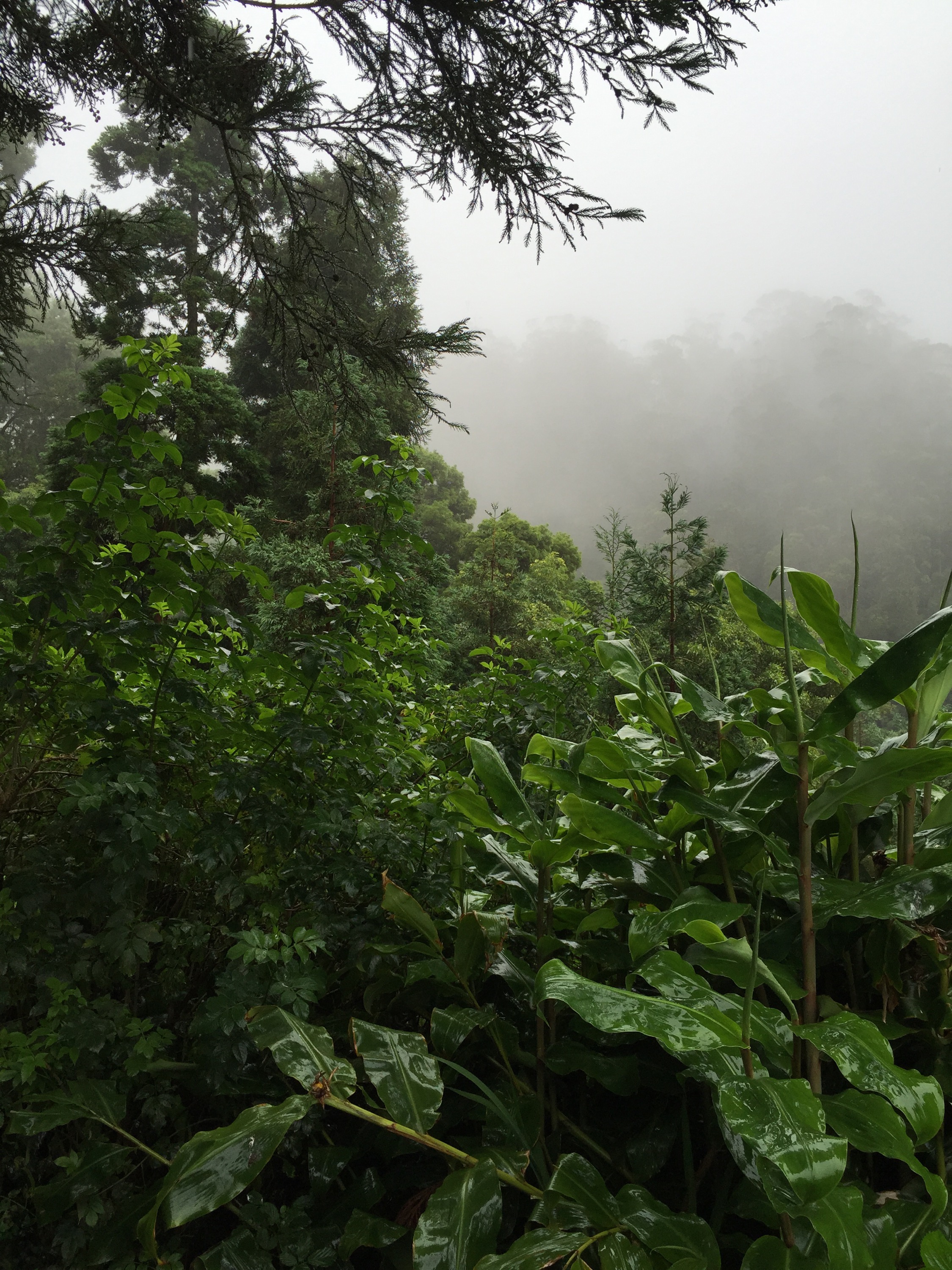
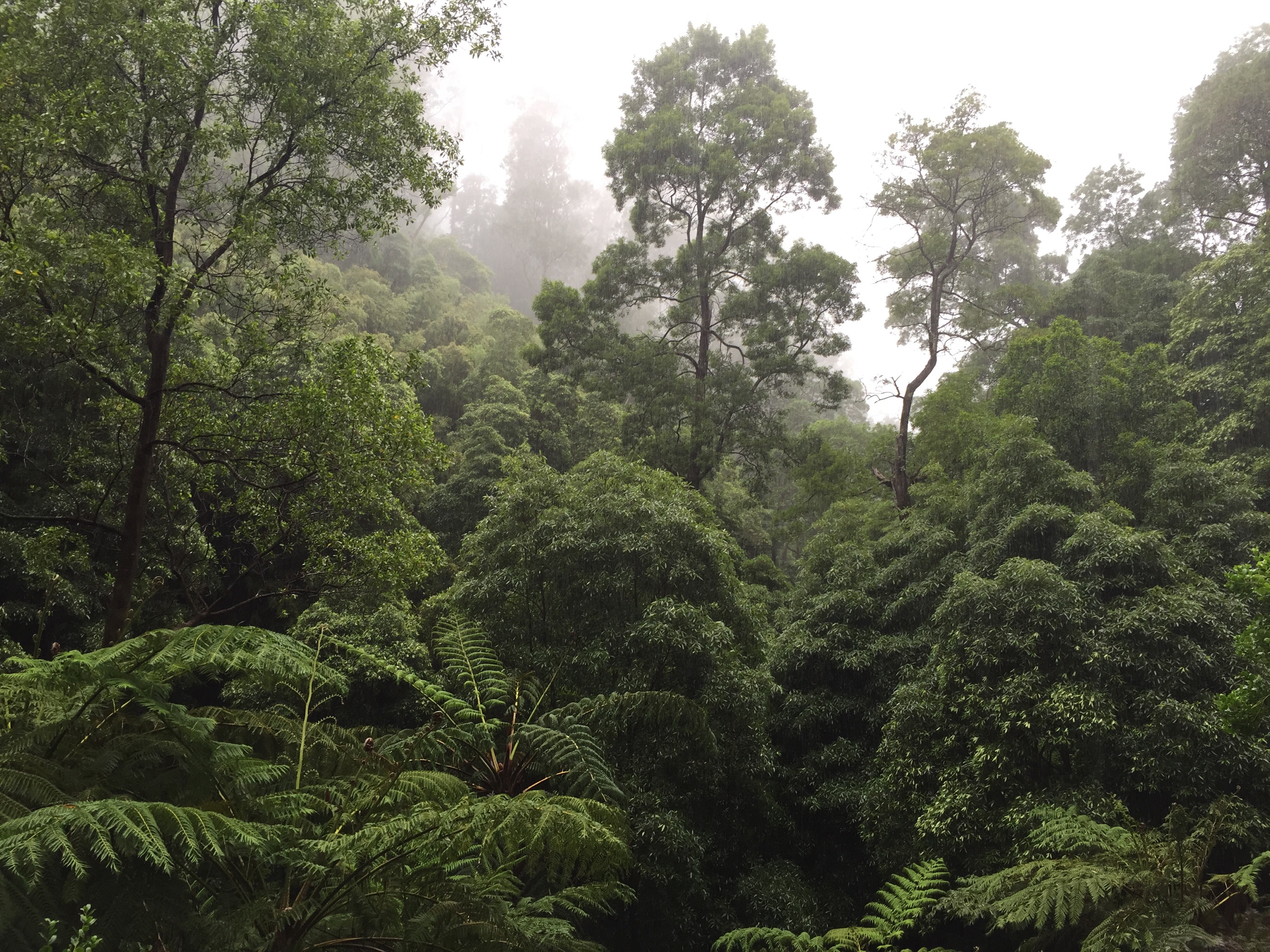
Here I’d like to mention that next month I’ll be travelling to Africa to relax, unwind on the Cape Verde, while listening to mornas. The featured picture comes from Azores though, where, enchanted by its remoteness and beauty, I decided to discover more of the Atlantic archipelagos.
Morna – “Ocean blues”, Cape Verdian emblematic dance and music genre, recognised worldwide mostly by Cesaria Evora’s and Maria Andrade’s works
“Faz um ano, faz, que eu tenho muita paz
Quase um ano tem, e tudo muito bem
E se eu não voltar, não vá se preocupar
Todo mundo tem direito de mudar
Que bandeira que você deu
Que bandeira, não me entendeu
Caretice tua chorar
De maneira aqui pra brigar (…)”
These lyrics, coming from Marcos Valle’s ‘Que bandeira’ classic tune are one of my all-time favourites. The essence for non-Portuguese speakers boils down to being free to live wherever you want, being the owner of your destiny, choosing your future regardless of your origin.
“(…) Eu não voltei
E eu não voltei porque agora eu sei
Naquele papel eu ia pro pinel
E se alguém disser que eu me desmontei
Sou dono de mim e faço o que quiser
Que bandeira que você deu
Que bandeira, não me entendeu
Caretice tua chorar
Caretice tua brigar (…)”
So it’s been almost one year in Berlin. It’s good to make a retrospective of what I planned to accomplish, and what I actually did. The most important thing is that I feel happy, although the fact is that I am very free to travel and re-visit my beloved places. I have also started gathering my learnings and thoughts on my paralel blog: Berlinering, where I describe my current experiences and soon will publish some sort of essence of my first year in Germany.
‘(…) Sigo te querendo, te cantando, procurando uma desculpa,
Te querendo mais.
Vou te cantando, te querendo, procurando uma desculpa,
Te cantando mais.
Sigo procurando uma desculpa, te querendo, te cantando,
Te querendo mais
Vou procurando uma cantada, te querendo, me desculpe,
Te cantando mais
Tou sabendo de você
Tou sabendo, podes crer!’
I still love the places I lived or been to (like this heavenly beach of Joaquina in Brazil pictured above), but I don’t long for them. I know that if I want to come back, I would, anytime. This is probably why I am so happy here, about the choice and opportunity, and not the necessity. Because everyone should be free to live wherever he/she wants to. I would love this to be valid for everyone, in this crazy world we live in…
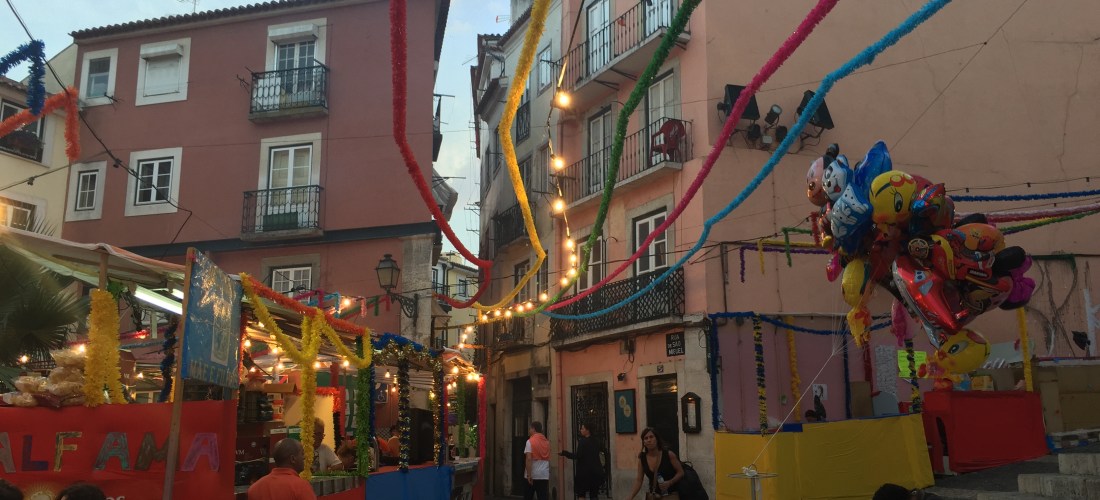
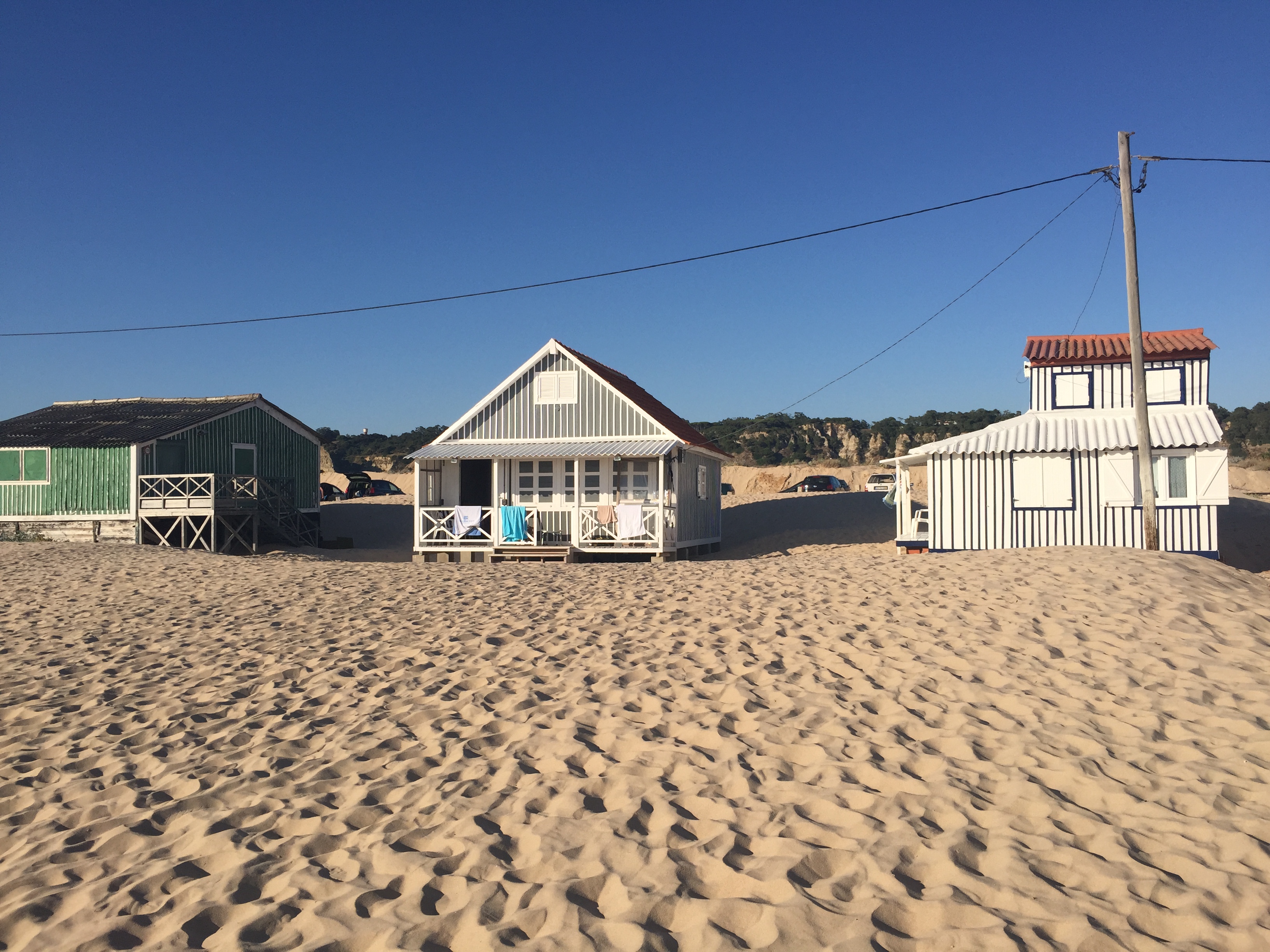
In June I re-visited Lisbon on my way to Azores and spend there two weekends. I was lucky enough to live the last days of the Santo Antonio festivities and visit my favourite beaches: Guincho and Caparica. The city shined in the light of the sun, or yellow lanterns during the night.
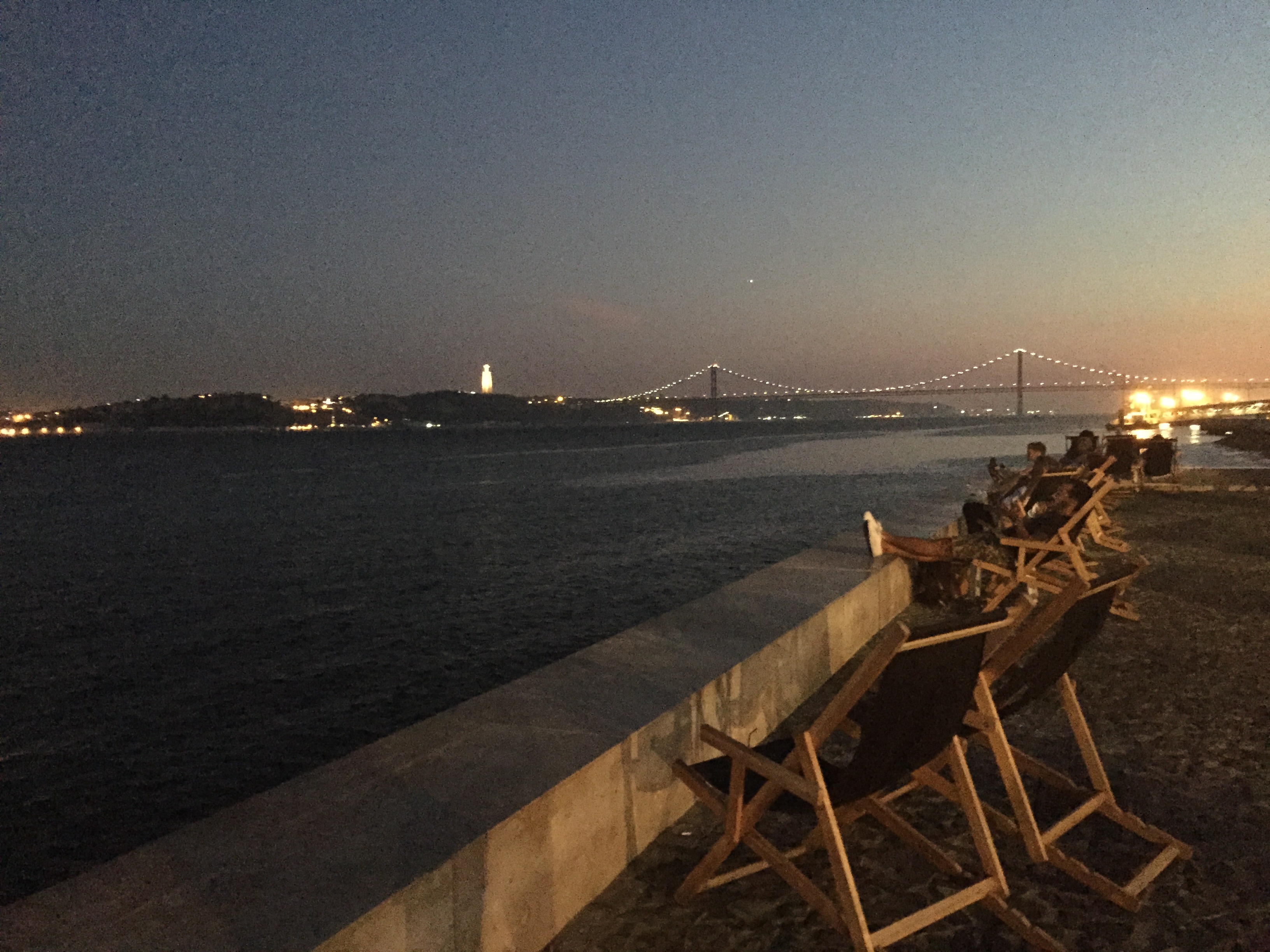
It changed greatly as well. The infrastructure is much better since the airport connects the city centre with a metro line. The Tagus river bank has now a boulevard to enjoy the sunsets while listening to the urban beat (often: Brazilian, Angolan combo of sounds – so good…). There are, however, more tourists than before. Lisbon became one of the ‘hottest European destinations’, and it is perfectly understandable. Fascinating history, quirky architecture, sunny weather, best beaches in Europe within 1 hour drive reach, great cuisine, English-speaking services and affordable prices. Sounds great, but too familiar for someone who lived 4 years in Barcelona, where ‘normal life’ has become unbearable due to the massive tourism.
That’s why I am worried that the authenticity of Lisbon is at risk. My Lisbon friends no longer visit Alfama, as it is mostly invaded by tourists on segways, or worse: tuk-tuks creating serious traffic jams (!) on the little cobblestone streets.
I don’t want to rant about tourism in general. This is what we all do if we want to discover new places, don’t we? But then let’s call it travelling. Lisbon is one of its kind, special location and I always love to come back there, but when I do, I try to respect the locals, and their everyday lives and customs.
I always feel so welcome on the tiny streets, bars and pastelerias where time stopped years ago. I look at the faces that have seen different times, and now staring at the unconscious or intoxicated tourists passing by with the same indifference. Yet if you try to live the spirit of the traveller living the night and day of Lisbon, you will notice the difference.
Bem-vinda seja, Lisbon seems to tell me anytime I land there. And soon I’ll be there again, on a my way to a very interesting art conference!
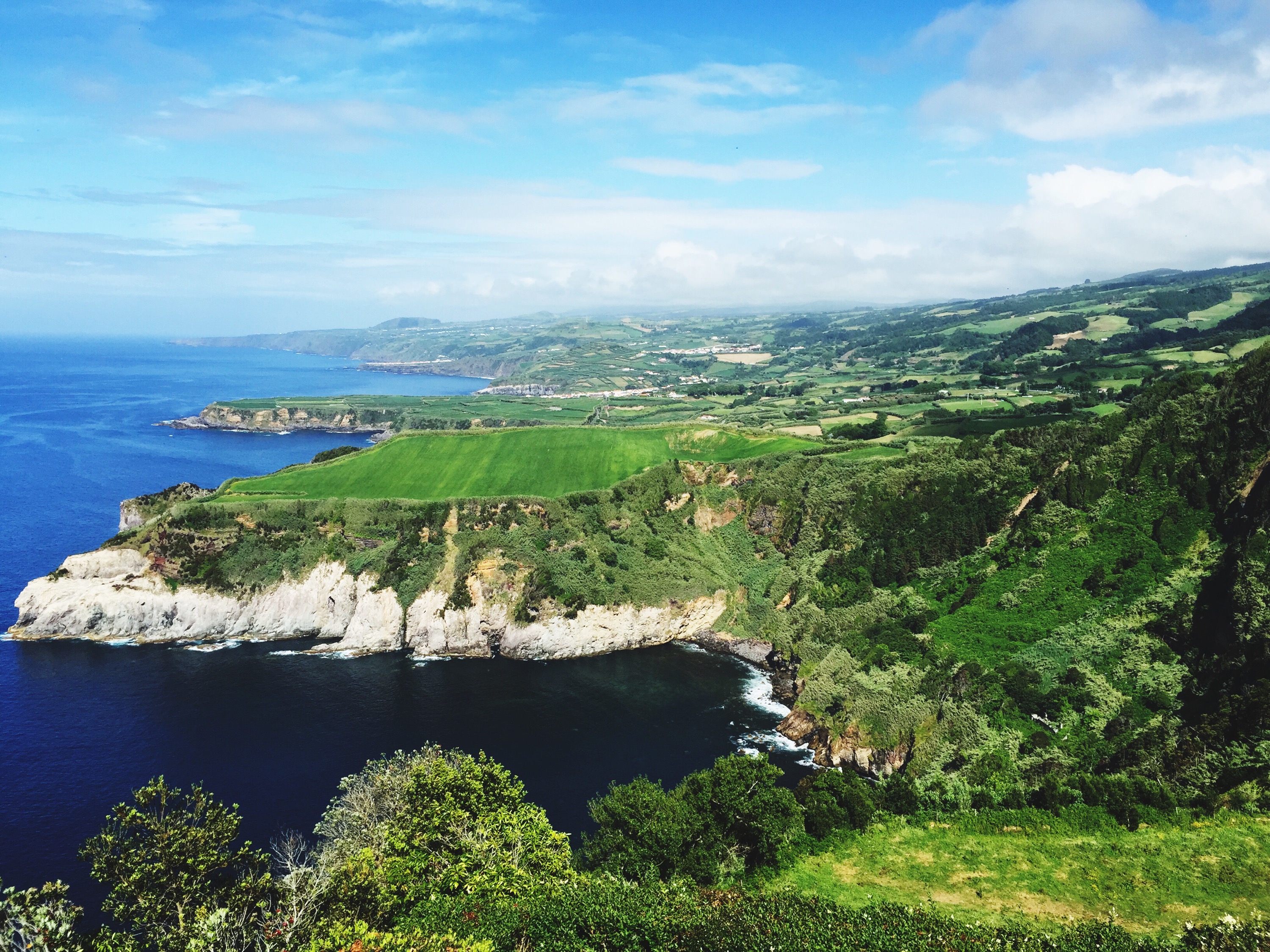
This is my last post (for now!) about the paradisiac island São Miguel, the most accessible one from the Azores archipelago. I have already written about its very special capital, and about the inland treasures. There is probably much more to write about, but I deliberately would like to leave the pictures taken in Sete Cidades (“Seven Cities” in English) and on the shores of the island to speak for themselves.Panoramic view over Sete Cidades and its Green and Blue Lake (Lagoa Verde and Lagoa Azul). The name of the town comes from the times of building a sustainable, democratic power in this part of the island, taking the votes of São Miguel’s seven cities representatives. Sete Cidades is located in the westernmost part of the island, in the picturesque setting of the crater lakes. The difference in colours comes from the fact that one is more affected by the algae. However, the effect is indeed magic, and could probably be a great Portuguese candidate for the Seven Wonders of the World.
On the northernmost shores of São Miguel one can experience equally breathtaking views and try tea or pineapple from the local plantations. Actually, Azorean tea is the only one remaining old-fashioned producer in Europe. The delicate taste of Cha (eng. tea) Gorreana reminds me of this wonderful trip anytime I drink it back at home…To finish off this chapter, I would like to share my last moments on the Northern tip of the Island, where the peninsula is funnily shaped like a tartaruga (eng. turtle). I did not say ‘adeus‘, only ‘ate logo’. Next time I’ll visit Azores, I’ll try to sail or fly to the smaller, less accessible islands, I’m sure it’s worth to touch again this piece of paradise in the middle of the Atlantic Ocean.
São Miguel is not an island for lazy bones. The island has its unique microclimate, varying from tropical, to moderate and windy at the coastline. While visiting the inland of São Miguel, make sure you go prepared for 7 seasons! But most importantly, prepare for breathtaking views and picturesque landscape, which is still not empoverished by the massive tourism presence and is ideal for a day-long hiking.
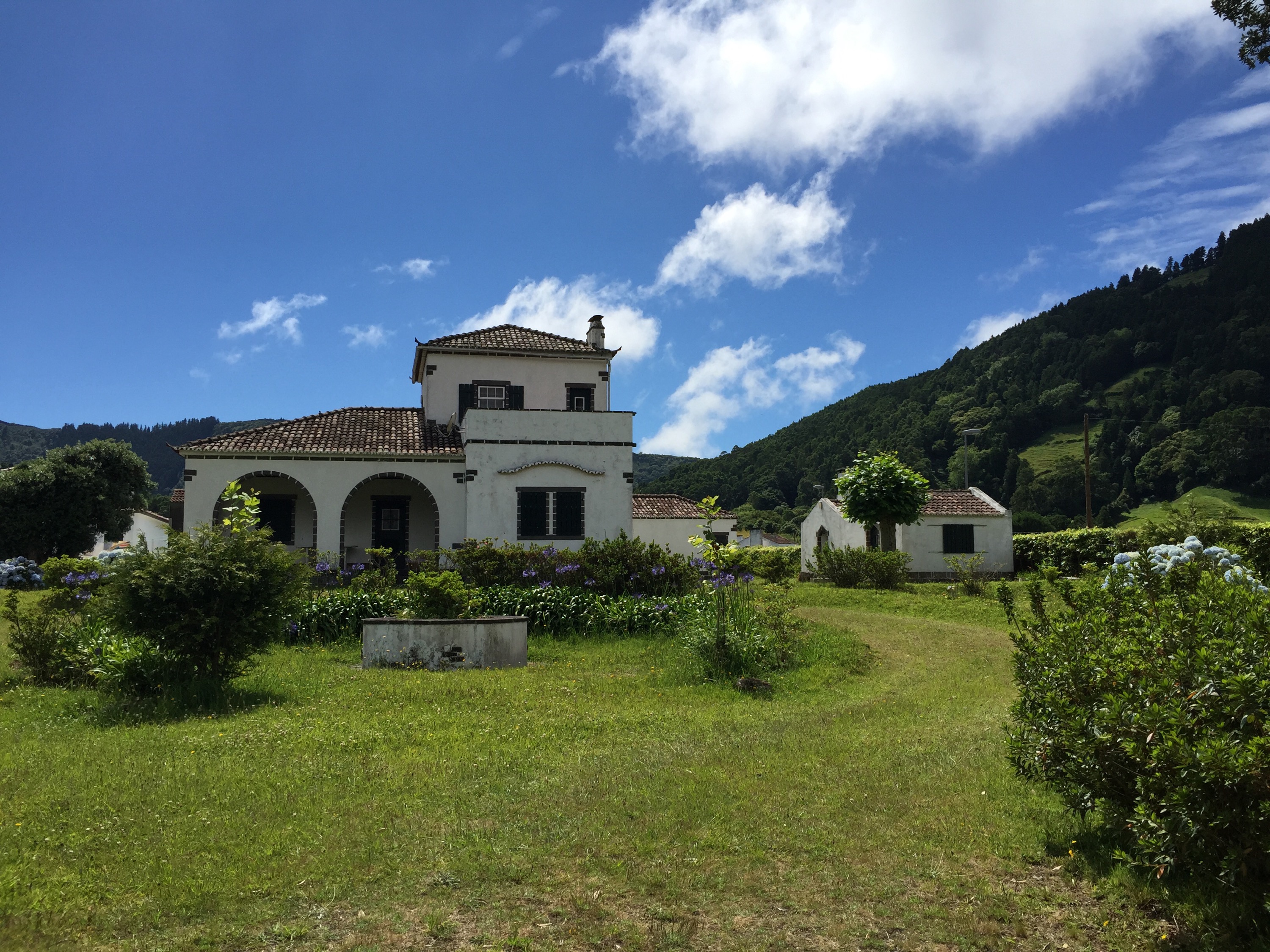
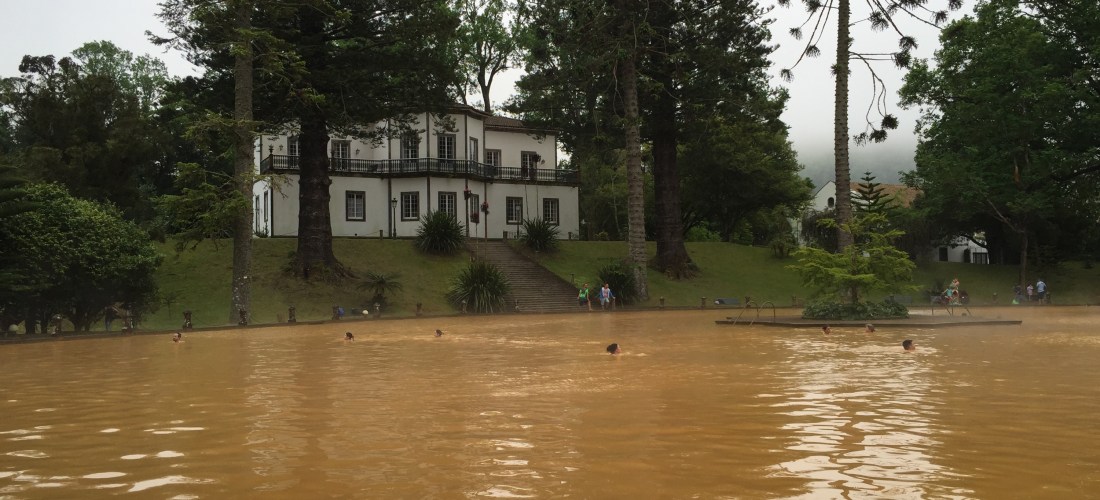
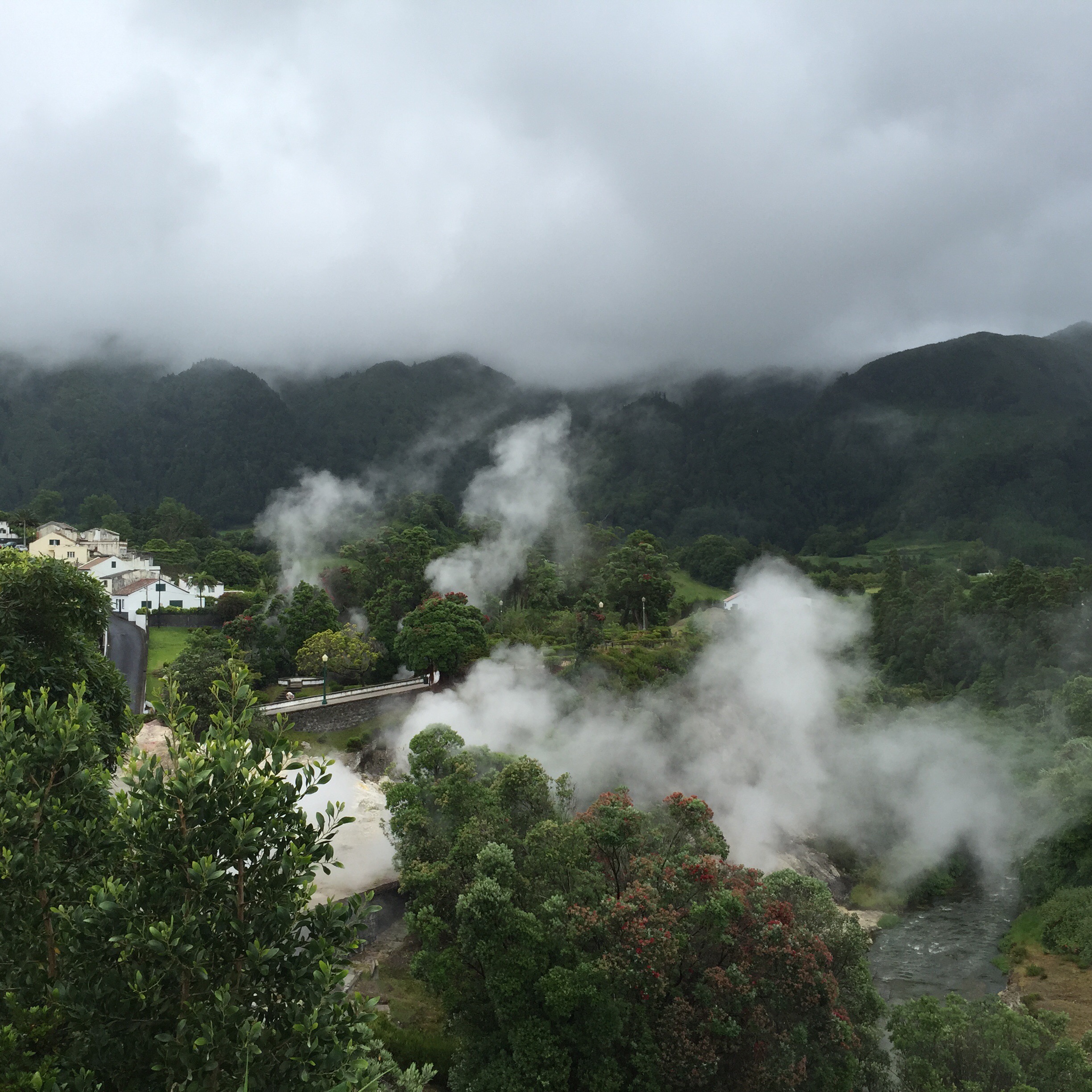
Given its volcanic origin, one can find various crater lakes which can be reached by winding roads from lovely and so unpretensciously named towns such as: Ponta Delgada (“Thin Tip”), Rabo de Peixe (“Fish Tail”), Ribeira Grande (“Great River”) or Furnas (“Heater”). The truth is, it can get very warm and humid when you enter the green forests on the sleepery hills. When the rain caught me on the trail to Caldeira Velha (definitely my fave name “Old Boiler”), I did not think twice to jump in the hot spring.
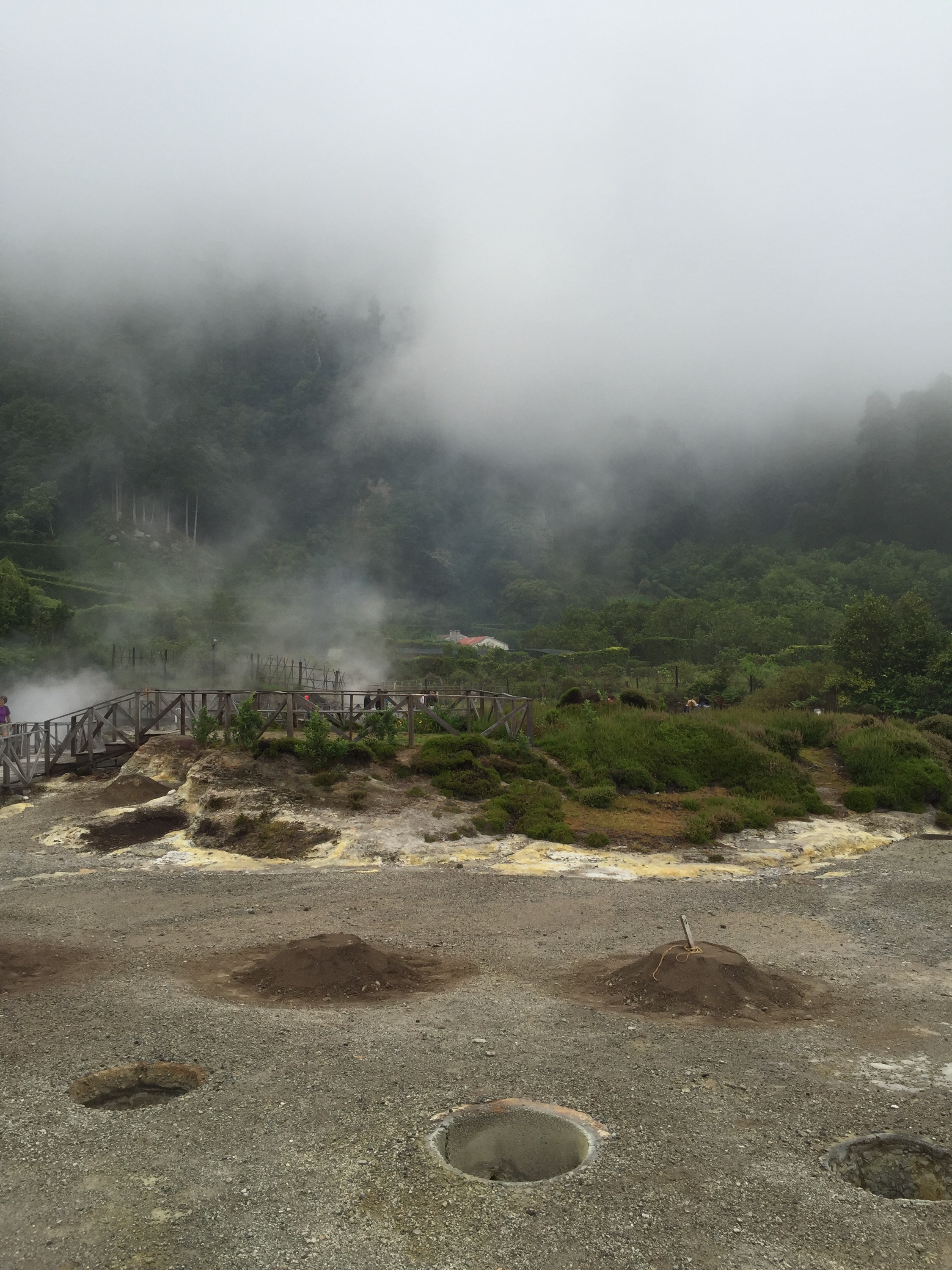
Hot springs, full of iron and other minerals are a free retreat offered by Mother Nature on this heavenly island. Another interesting fact is that in Furnas, the typical dish called cozido (“Cooked Meal” – another brilliant and self-descriptive name!) is prepared… below the ground. It takes about 8 hours to prepare a dish consisting of various types of meat and vegetable stew buried in a huge metal pot.
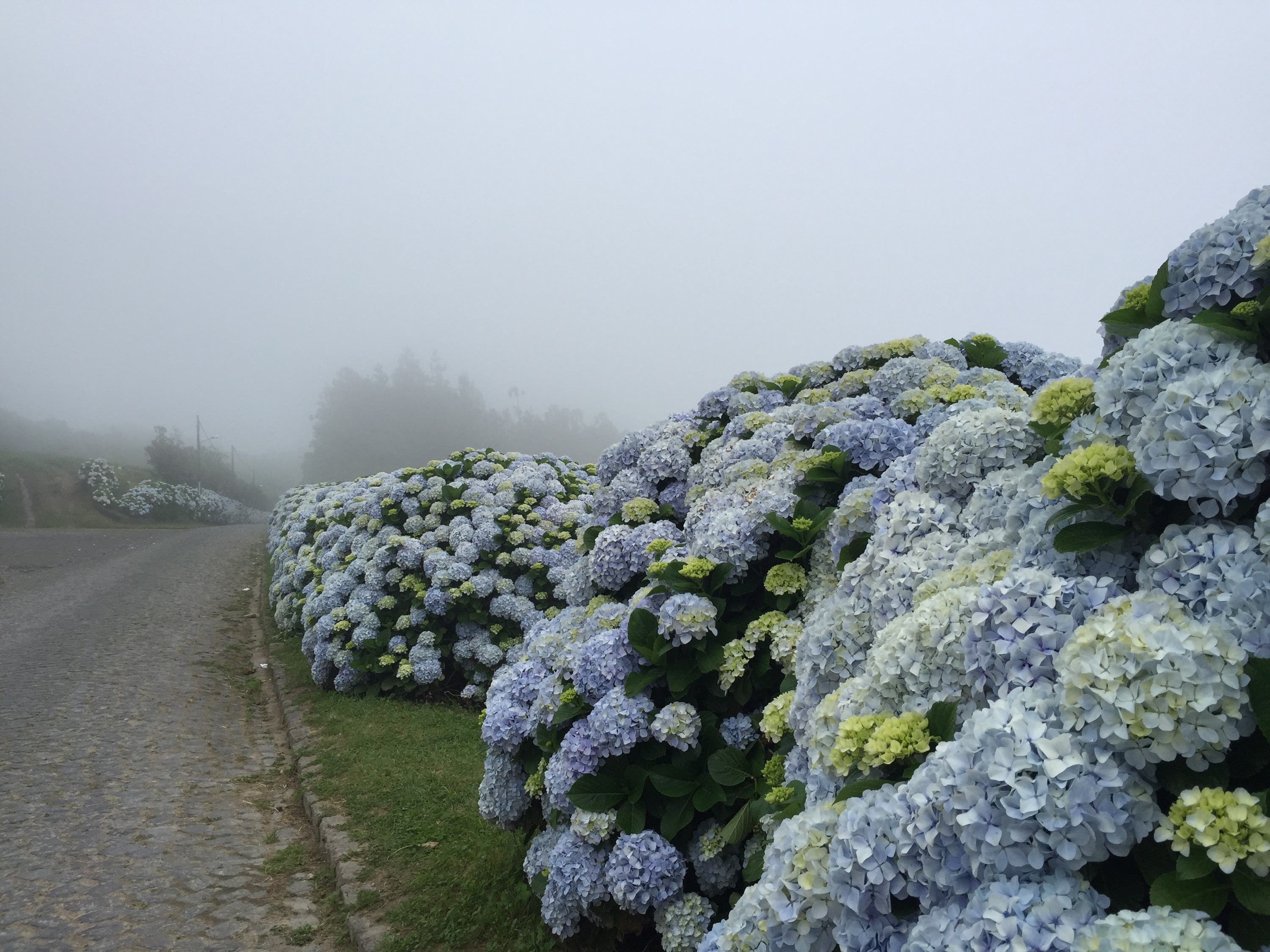
Yes, exactly like this one. Inside, the geothermal temperature goes up to 90 degrees Celcius, offering fantastic conditions to cook a very delicious stew. The inland hills and roads are also very mystical. Almost all the roads are naturally decorated by hortensia (eng. hydrangea). The reason for it is also pretty simple: once upon a time, man discovered that cattle somewhat hates the smell of it. By planting it by the road, he made himself sure that the cows won’t be passing it. By now, these beautiful flowers grow almost everywhere the roads of the island, making São Miguel a particularly picturesque place to wander around and never come back.
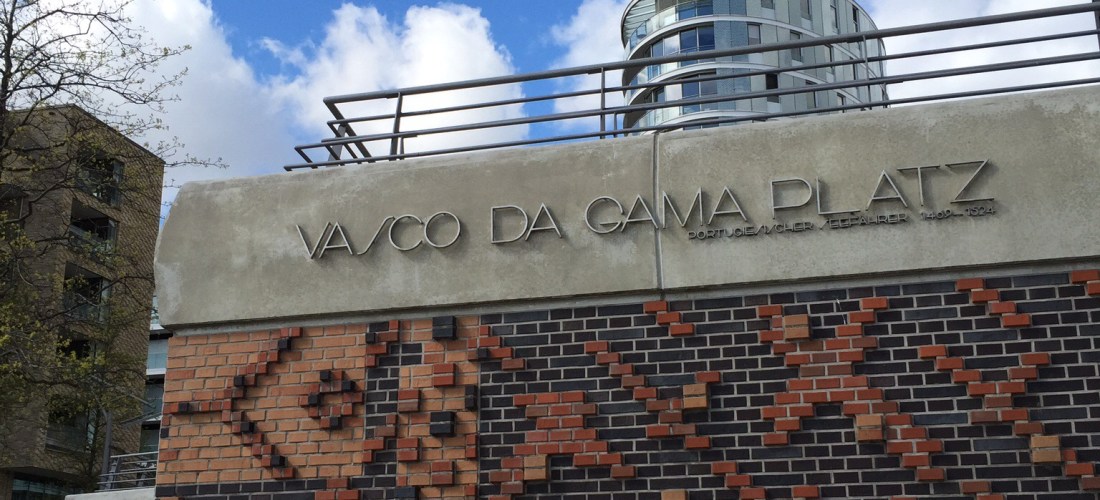
Spring equals travels to me – and this year I am very curious to explore different German cities. After my Easter trip to the East Baltic Sea (called ‘Ostsee’ = ‘East Sea’ in German), the next destination for the long weekend of May 1st was scheduled for Hamburg. I met people originating from Hamburg and some who just lived there for a while, but all of them were speaking very fondly about the city. I followed their great tips and during 3 days I explored the highlighted parts and much more. The major surprise was finding the ‘Portugiesenvirtel’ aka Portuguese bairro very closely to the city centre.
Portuguese district is located very near Landungsbrücken – a bridge separating the centre and famous alternative St. Pauli. I was lucky enough to arrive there during the time for almoço (lunch). Even though I plan a trip to Lisbon in Azores in only one month, and I often eat out in a Portuguese restaurant in Berlin (which happens to be steps away from my workplace), I got myself into saudade-mode. Not only the taste of vinho verde and excellent carne alentejana, but the fact, that for a moment I could only talk and think in Portuguese, was just a precious surprise.
So what’s the story behind? Quite obviously, the Hanseatic city of Hamburg being Europe’s largest port since centuries, attracted also famous Portuguese sailors. First settlements of the Portuguese families date back to 16th Century, while the country was a growing colonial empire.
Just one afternoon, and my soul felt very contented. I also learnt a simple poem displayed among different Portuguese items in the restaurant, very relevant for the forthcoming Mother’s Day (quite different date in different countries: but happening tomorrow in Germany): “Com três letrinhas apenas Se escreve a Palavra Mãe É das palavras mais pequenas A maior que o Mundo tem”
There is no other language that makes my soul happy as much as Portuguese does. Even that nowadays I discover the beauty (ja!) and funny particularities in German and meet amazing people here, I feel that a part of me belongs still somewhere else. But it’s no longer just an empty feeling of longing aka saudade, it’s rather enriching and empowering on various occasions.
In other words, it motivates me a lot to understand and be understood till some extentent in the language I once thought impossible to learn (German) but still think and feel in Portuguese when it comes to certain things, even though I am not a native speaker. Just as friends can become our family of choice, I believe strongly that for linguistic freaks foreign languages can play a similar role!
Also, I caught myself speaking with my Brazilian colleague passing to English ‘when it comes to business’ and leaving Portuguese for purely fun times. I unconsciously bump into the Brazilians and speak about piadas and bagunças long hours. Same goes for Spanish, but that’s another story.
Well, I am not alone, and finally I discovered a documentary film which connects the most interesting aspects of this language: Lingua – Vidas em Português.
Multilayered, spoken over different parts in Europe, Americas, Asia and Africa, Portuguese is now not only a language that came from the colonial ancestry, but that has merged different races, roots, tribes and geographical locations.
My father used to tell me long time ago that both the Southern hemisphere and the Portuguese language are the future of our globe. He was a visionary and extremely wise person with a capacity to predict different economical processes long before. He was thus always pushing me towards learning this niche language back in a day, as he believed that I will succeed somewhere in this big world.
It was a great revelation to see how Portuguese language has shaped the lives of others, but most importantly, to know that I am not the only one to feel the multicultural and ethnical particularity which probably no other widely-spoken language of nowadays has.
My friends asked me several times which bairro of Lisbon is my favourite. And I had quite a dilemma to choose… The title of this post ‘From Chiado to Bairro Alto’ is nothing more than taken from a popular fado song, but actually it links a story about two bordering neighbourhoods of Lisbon which I happen to like a lot!
Chiado, nowadays ‘a posh face’ of Lisbon, with plenty of designers stores, elegant cafes and, all-time present Fernando Pessoa. He is actually sitting 24/7 in the famous ‘A Brasileira’ café. It is worth visiting yet I have to make a remark that wherever in Portugal, coffee is just exceptionally good and cheap. Be aware though when using the original Portuguese nomenclature for asking a waiter for the great variety of coffees. A simple espresso will be called here bica and not bico (please look it up in http://www.urbandictionary.com, for the sake of not getting Portuguese spam I will remain silent about the meaning and usage of this word).
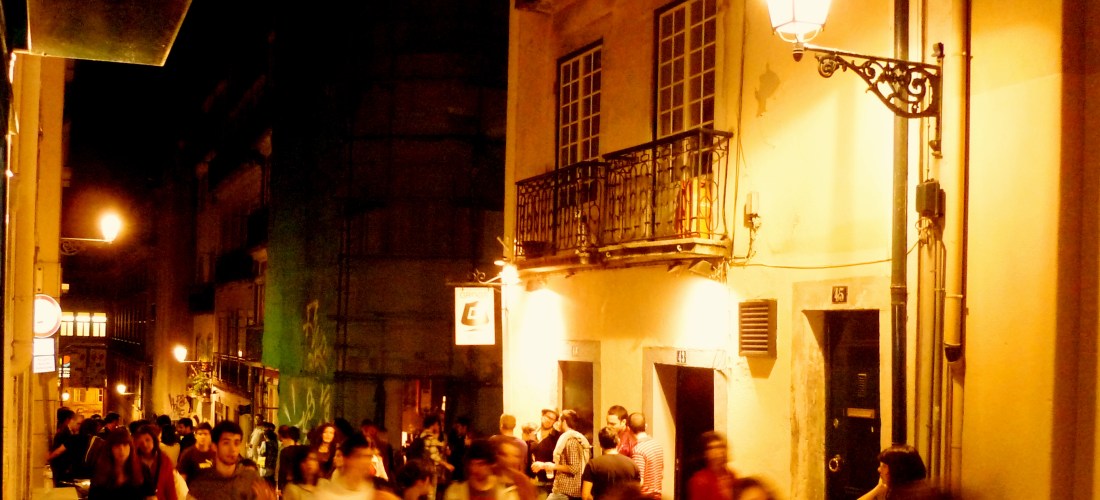
Meanwhile Bairro Alto is a Mecca for the party people, (Erasmus) students and/or those who enjoy the busy atmosphere of barzinhos. There is pretty much every musical style to be met in this tiny but crowded place, from indie rock through Brazilian live music to Berliner minimal tech. Not much recommended for those who actually like to sleep during the night, but for those who like bohemian wandering around 4 am it will probably be a perfect destination.
















 LUSOFONETICA