(He)Art Basel

Music, Personal, Travel

This month I visited Basel thanks to my dear friend’s invite. We connected a while ago in our professional circles and been talking about change management, life and spotted we vibe life at a similar frequency. We also both love jamón serrano, writing, dogs, among other things.

I’ve been to Switzerland several times before, but never to Basel, knowing mostly it is a cultural hub, especially around June, where Art Basel festival takes place. So I decided to experience Basel fully, and organized a trip around the festival’s dates.

I found nature, culture, vibrant and young city life, strong electronic music culture, interesting pop ups, contrasts of the brutalist and modern architecture of Klein Basel and the medieval, classical Gross Basel.

Since I travelled in June, the days were incredibly long, the sunsets were coloured with all possible shades of pastels – being an art masterpiece itself.

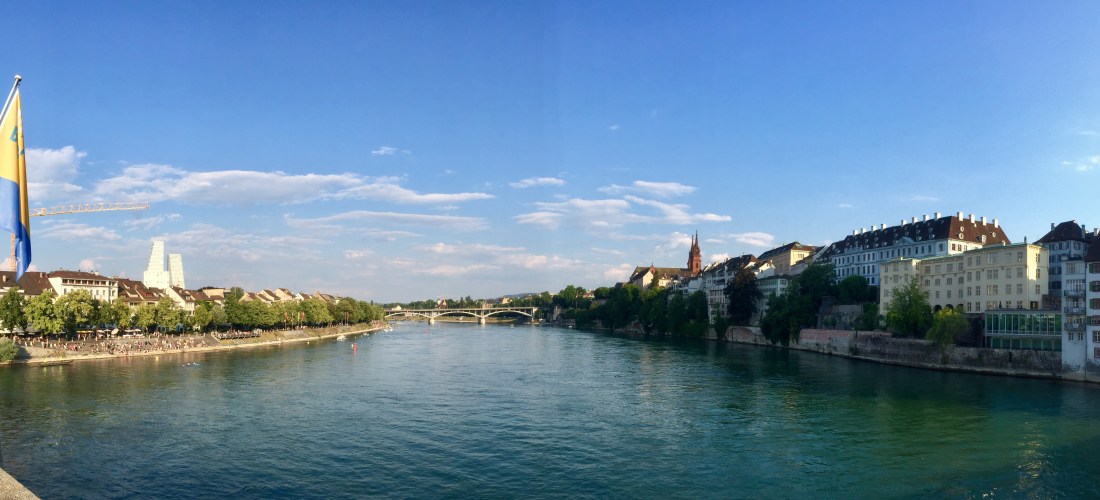
What I enjoyed the most was the relaxing vibe around the Rhein river, happening in parallel to the festival, where Basel people would take their inflammable fish-backpacks aka Wickelfisch and simply throw themselves with the crystalline waters and float until they reach French or German border!

Yes, water in Rhein is so clean one can safely enjoy the summer in the city centre. The location at the border of France and Germany makes Basel truly a meeting point, and is sort of absurd you can end up ‘abroad’ simply taking a stroll or a tram ride a few stops away. A famous techno club Nordstern is located exactly at the peninsula where all the borders meet.

The heatwave was so bearable also because of the presence of multiple parks, fountains where both humans, dogs and birds took refreshing baths. All such activities permitted.

The cathedral, situated in Gross Basel at this time of the year was a central place for Parcours – various art happenings and installations, a free part of Art Basel festival. The cathedral itself is so inspirational with its Hogvart-like courtyard and facade.

My friend took me to her fave marketplaces, bookstores, designer stores, and cafes – a perfect plan on a Saturday morning. We spontaneously bought some flowers, Swiss design as in watches, dresses and tiny gifts for my friends and family.

In the afternoon, we mostly hang around the river, joining Swiss style – pardon my Spanishness here, but actually the Latin community was mostly driving these activities – chiringuitos (beach bars), asados (grill) and pop up DJ sets.

What about Art Basel? I feel like it pictures the city and the world of art in a contained universe of Messe. The building of the Messe is a masterpiece itself, a huge ‘eye to the universe’, and walking around the exhibitions of Unlimited, Galleries and Design Miami one could easily spend days.

I stumbled upon the pieces known and unknown, and I ‘like the art’ although I am far from being an art buff. I noted some of the most moving pieces, so that one can have a look and analyse it for themselves. Not in particular order nor always correspondent to the pictures, which is a part of the game.

Brigitte Kovanz – Light Steps (1990), Francois Morechet & Tadashi Kawamata – Pier and Ocean (2014), Selma Selman – Painting on Metal – Mercedes Benz (2023), Jorge Mendez Blake – Dismantled Wasteland (2023).

Christian Merclay – Doors (2022), Annette Messager – Le crabe cancer (2016), Anish Kapoor – Random triangle mirror (2018), Firelei Baez – A taxonomy for tenderness (2023).

Bruce Nauman – Two leaping foxes (2018),Robin Kid – Kingdom of Ends – I (2023), Mario Merz – Bisonti (1992).

The Picassos, Warhols, Kandindskys, Lichtensteins, and Schieles were for sale, too – and it was interesting to see the prices. Though can’t afford them, if someone does, and likes art, maybe diversifying is a good idea in the vibecession times.

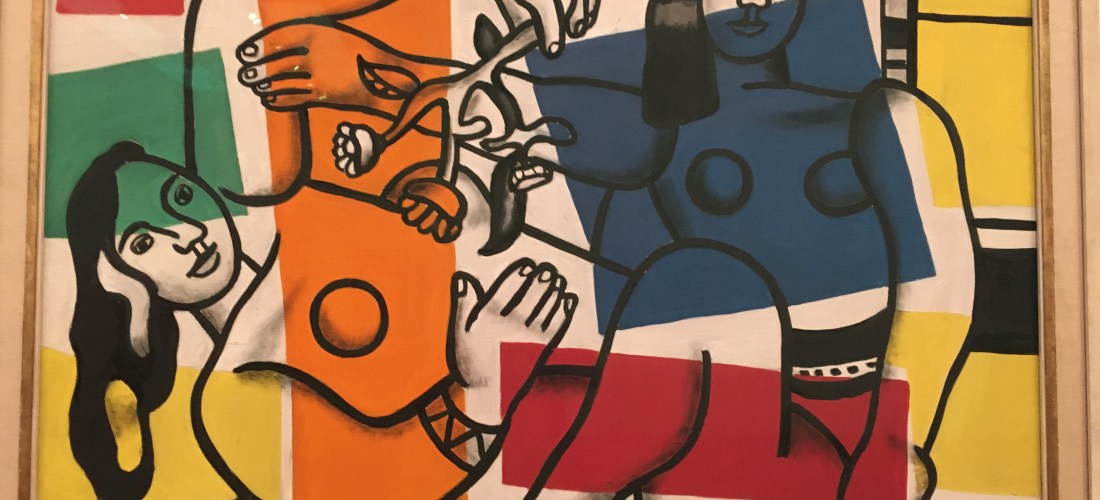
Following inspirations: George Condo – Untitled (2001), Auguste Herbin – Vendredi (1951), Max Ernst – Foret (1927).

Conny Maier – The Source (2023), Bronwyn Katz – /xabi (2021), Radcliffe Bailey – Upwards (2018), Augustas Serapinas – Gym (2023), Christine Streuli – Right in your face (2023), He Xienguy – Inherited wounds (2023), Jesus Rafael Soto – Esfera Amarilla (1984).

Ed Ruscha – You and Your Neighbours (1987) – probably my fave painting by now, Jean-Michel Basquiat – Onion Gum (1983), Antoni Tapies – Aixeta (2003).

At the end of the Untitled exhibition everyone could participate in the Scrabble game, answering with limited amount of letters “What makes you creative?”. I added a few from my end – guess which ones.

I could go on and on reciting on my favourite art works, such as: Monica Bonvicini – Never Again (2005), Giuseppe Penone – Spine d’acacia – Contatto, aprile (2006), Yu Hong – The ship of fools (2021), Ron Terada – TL;DR (2020) but I’d rather stop. Half-day through Art Basel I got so overstimulated by the works, I needed to nap – and I was surprised to see some fellow visitors napping in specifically designated areas. Dreaming of colours, shapes and thoughts they carry in the eyes of the spectator.

Pais Vasco – ozeano, janari eta kultura

Travel

In search of the Atlantic Ocean, nature and culture this month I was lucky to visit Basque Country. Until the very end I was not sure if the trip will be possible, due to COVID-19 still present in our lives.

With all the precautions, I decided to take off and landed in sunny (!) Bilbao. I planned this trip in advance as a part of anniversary and birthday celebration with my boyfriend, knowing how much he loves the green landscapes of the North of Spain. As well, that Basque Country is one of the places no foodie can miss!

Travelling by air was not as dreadful as we expected – Malaga airport was almost empty on that day and we almost dreamt that air travel would look like this everyday. People being respectful and keeping the distance, simple as that. Similarly, the streets of Bilbao were spacious and only with some notion of tourism (people who were, unfortunately, the only ones not wearing masks). 

Bilbao anyhow is a living example of perfect rejuvenation of the post-industrial landscape. Awarded with the ‘urban Nobel prize’ in 2010, this city is perfectly friendly to breathe, walk and enjoy life. The sidewalks are broad, the road signals signs are melting ideally with the surroundings – to the point that at the back of them, you can find a depiction of tree leaves shapes!

We were very lucky with the weather, which is mostly rainy and windy throughout the year, and thus it is so beautifully green. Coming from Costa del Sol, where the climate is probably the sunniest and mildest on this planet, but largely affected by deforestation, green spaces are more of an oasis than regularity. 

We visited a few bars and restaurants in Bilbao and regardless of the pricing range, the experience was exquisite. There is no such thing as mediocre food, nor wine in Basque Country! As long as you are flexible and let yourself be surprised – most of the dishes contain fish or seafood, which is the zero Km dish there. We dream of pintxos for breakfast until today.

We also went to the famous Guggenheim Museum, where we visited permanent exhibitions, including the magnificent works of Jenny Holzer and Richard Serra, as well as some interesting temporary exhibitions of Olafur Eliason (the light!) and Richard Artschwager (the useless piano!). 

When talking about culture, it is hard not to mention the very separate language if the Basque. I’ve been fascinated by it and tried to grasp as much of it, as possible. Since my mother tongue, Polish, is often referred to as one of the most difficult languages to learn, why not trying to pick some Basque? My favourite word spotted in public space was probably komunak. I absolutely loved the idea of naming public toiler as a common place to go to, when needed.

Apart from the city, we took some time to visit the coastal town, even though we didn’t have too much time to wander about. Thanks to my colleague, we went to a coastal town Mundaka, famous for its picturesque landscape and one of the longest and strangest waves forming at its Atlantic shore, due to sedimentation of the river floating to the ocean. This attracts surfers from all over the world to practice. On the way, you can visit the town of Guernica and the natural park of Urdabai.

We needed this break, although the times are not perfect for any further travel. We are fortunate to live in one of the most beautiful countries full of diverse cities, cultures, languages and landscapes to choose from, close and far. Even if we are confined again soon, we will have pictures to come back to and travel back in time. 


A sentimental journey back to Sevilla

Personal, Travel

Seville, known as ‘the prettier sister of Malaga’ is probably one of the most beautiful cities in the world. This year, confined at home since over 4 weeks due to the devastating pandemic worldwide, and at the same time, very grateful to be healthy and safe, I am reminiscing some of my getaways to this charming place.

Sevilla (as I prefer to use the original naming convention) is the 4th largest city in Spain with the largest area of Casco Antiguo, the old city centre, and plethora of architectural gems coming from various centuries: from ancient times, romanticism to modern influences.

Famous for its oranges blossoming throughout the year, flamenco, unbearably hot summers and religious traditions, Sevilla attracts its spectators especially during Easter, for Semana Santa processions. I have never chosen this time to visit Sevilla, but instead, went there a couple of times in the colder months to live and breathe the city staying in the least touristy neighbourhoods.

Walking around the city is incredibly pleasant, as it offers a lot of shadow in its parks and is very green as for a city in deforested Andalucia, as well as there is plenty of tavernas and peculiar restaurants or bars, such as church-themed Garlochi. Cuisine is very varied and apart from traditional Spanish tapas, there is a lot of healthy options as well as Latin-American or gourmet options, such as Abantal. This restaurant is based on local ingredients only and uses a lot of symbolic, including the NO8DO ‘No me deja-do’ – the loyalty for the city.

Sevilla, apart from being a monumental testimony for the Spanish crown, is also very lively nowadays, and its modern architecture and art is very intriguing, including the Setas installation as well as the neighbourhood built for the Expo 1992. There are various guides to discover Sevilla by its azulejos picturing the scenes from the old times and referring to universal topics like death, festivities and changing seasons.

And even for a non-religious person like me, the mysticism of Sevilla makes me shiver down the spine. As I accidentally witnessed the procession of Nuestra Señora de la Encarnación carried by dozens of men and followed by a local orchestra, I was in awe for cultivating such a beautiful tradition for ages.

And this is Sevilla for me, really. The beauty of the sunshine in the day, and the unbelievable light of the night, with mystical secrets almost in every corner, mixing up with more ludic traditions and customs.

I am grateful to be living in a vicinity of such a different city only 2 hours away and today I reminisce the fact how much I love exploring the region I am lucky to be currently living, Andalucia.

Meet me halfway, in Aveiro

Personal, Travel

I’ve been to Aveiro for the first time in 2007 during my very first trip to Portugal. It caught my attention as I was staying in Oporto and it was accessible by a regional train pretty easily. Worth mentioning that I was poor as a church mouse and the only reason I could afford it was due to saving my scholarship award money for months in order to buy the Eurail ticket. It would allow me to travel around Europe for 21 days using most of the train service. For the rest of the time, I was volunteering at an archeological site in the literal middle of nowhere, in the most rural (and authentic!( part of Portugal: Beira Alta, as I was craving for some manual, physical work in the sun, after spending a whole year studying clinical psychology and linguistics.

I recall a sunny, windy day; colourful houses and azulejos around canals and lagoons – thinking of a funny fusion of Portugal and the Netherlands. It was a day trip and I’ve enjoyed a beer in the sun with way too many tremosos – salty, marinated and thirst-inducing beans served often to create a drinking loop.


Fast forward 11 years later, I spontaneously found myself in Aveiro again. This time thanks to my partner’s sister who happened to be in Portugal around the same time we were. As she travelled to Oporto, and we were in Lisbon, we decided to meet halfway in Aveiro to enjoy a Sunday funday together. Not that Berlin and Warsaw are completely different and separated worlds, but why not meeting in Portugal for a change.

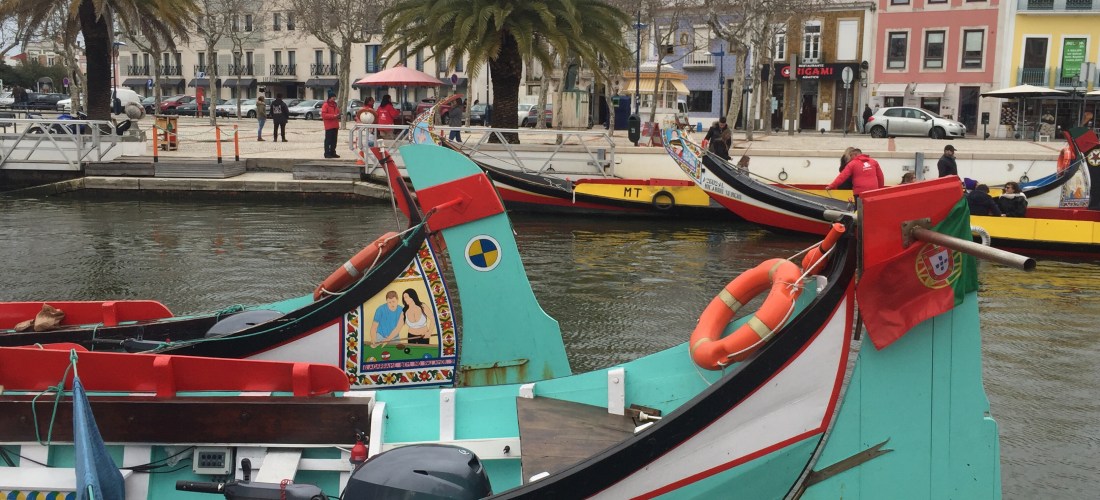
Contrary to 2007, it was the most rainy, springtime day and we couldn’t really explore the lagoons or take a gondola ride on the canals (although the obscene pictures on the boats were promising some great adventures!). Thankfully though we had a few indoor recommendations and bumped into a very friendly bistro, offering vegetarian treats, which is not a common standard in Portugal. As a foreign and exotic language speaking group and myself bringing a strange Portuguese Brazilian/mixed accent, we were getting some attention, and the locals were even showing us the mobile app on how to rate and match table wines. Despite the rain, it was definitely a Sunday funday family reunion in the middle of nowhere, and I would definitely repeat such an experience.

This month we’ll be traveling around Galicia in Spain, something I was looking forward to for a very long time, visiting Islas Cies, and Finisterre aka the medieval End of the World. I plan a few more extreme getaways this and next year too, so I hope to keep you posted regularly with some new content.


Águas de Março em Funkhaus

Music

This month I’d like to feature an exceptional event which I had a chance to participate in Berlin’s emblematic concert hall, Funkhaus. Since last weekend marked the first spring days (at least in theory) after a long and dark winter, celebrating this fact with Brazilian music, and authentic caipirinhas, felt like the most adequate thing to do!

Berlin’s Funkhaus curates some of the most amazing concert sessions since good couple of years, and I am a regular guest returning for the wide variety of top-notch music makers they showcase, from techno to bossanova.

I was delighted to sit in a front row in front of the artists who made such an impact and influenced the years of MPB, as Funkhaus offers a very intimate stage experience if only you wish to come as close. The event was connected to a broader charity campaign for the cause of saving the Amazon forest, and contained of Daniel’s and Paulo Jobim’s band together with Vanessa da Mata who rarely have a chance to play together. It gave the show a very spontaneous friends & family jam feeling.

Once again I am thankful to be in Berlin, thousands of miles away from one of my favourite places I once lived in, and be able to experience Brazilian culture at its finest. With Águas de Março in this part of the world, I am very happy to welcome the brighter, sunnier and hopefully warmer days to come when Berlin changes its face and becomes more of an open air carnival festival.

Thirsty for sunlight, happiness and positive vibes I announce the springtime has arrived with the sounds of MPB! Even if we’re still to experience snow, and crazy climate changes throughout the year. Which makes us only reflect more about our place on Earth, how we treat it and how we can make the most of our local place we live in. Which is a different topic, so I’ll let the music speak.

Oranges in the winter – a short trip to Valencia

Music, Travel

I’ve been to Valencia for the first time over winter holidays, when I still used to live in Barcelona. This year I came back to this beautiful place, as I was invited to participate in the Berklee College of Music panel for re-envisioning careers in the entertainment industry.

Since winters in the part of Europe I’m living in can be particularly bleak, dark and long, an escape in January to the Mediterranean city was a bliss.

Valencia is a vibrant, yet smaller and less tourism-fueled city 300 km South from Barcelona, bridging a historical part with a modern architecture and initiatives.

In the 80’s it was an important place for the birth of rave and techno scene in Spain, following La Movida art movement. (In)famous for the Ruta Destroy, or Ruta del Bakalao, Valencia set the tone for the future of Spanish scene alongside Ibiza, Barcelona or Madrid.

Berklee College of Music shares its location with the Opera House of Valencia, and it’s quite common to spot people like Placido Domingo on its monumental corridors.

I was lucky enough to be shown Berklee’s interior and DJing and recording studios, as well as participated in the cultural programme including concerts, jam sessions with artists like Patrice Rushen.

Although it was a pretty intense business trip, I took some time to stroll around the streets of Valencia, enjoy the intense blue of the sky and the rays of sun, while the oranges were blossoming and the spring was in the air at the beginning of January.

While writing this now, it’s -11 degrees Celcius in Berlin, I’m living my dream working for the music tech industry and enjoy the occasional travel to exciting places like this.

Having an opportunity to connect with exciting composers, founders of Sonar Festival and Live Nation, chatting in Spanish I do realise though how fertile is the ground for creativity in places like Valencia.


Tres dias na Terceira

Travel

After visiting São Miguel – the biggest island of Azores, I promised to myself I will return one day to discover the rest of this incredibly beautiful and remote archipelago. This year I had enough time off to plan a trip around five other islands: Terceira, São Jorge, Pico, Faial and Flores. I took thousands of photos and collected unforgettable memories which I will hopefully share in the course of the forthcoming weeks. I will start with Terceira, which was the first (and not the Third – as its Portuguese name says!) island I visited this year.

How did I get there? Terceira, similarly to São Miguel, opened up its runway to cheap airlines and is one of the connecting airports if you want to go to the more remote parts of Azores with their local provider: SATA. It’s fairly well connected with mainland Portugal, as well as USA and Canada. Aviation is very well developed around Azores, since the sailing conditions may be too hazardous during the winter season.

The closest town next to the airport (‘aerogare‘ in Azorean dialect) is Praia da Vitória, a lively and probably the most touristic municipality, with a wide, white sand beach. I was lucky enough to take part of the Festas da Praia, famous festivity around the month of August. Some of the highlights were traditional touradas, gourmet food fair offering tastes of the Atlantic cuisine and folk dances from all over the world (for some reason Eastern European bands were very popular this year!). I later learned that I could spot similar kind of parties on each and every island I visited. This one is pretty big though, apparently!

I drove around the coastline of Terceira and stayed in the lovely town next to the capital: Angra do Heroismo (‘The Bay of the Heroism’). As the UNESCO World Heritage site, Angra is full of history, nature and culture (and stunning street art too!). One can easily spend two days just walking around sites like Monte Brasil, the largest crater mountain with the green caldeira transformed into an open air amphitheatre these days, or winding, colourful streets, botanic gardens and drink cafezinhos (tasty and famous Portuguese espresso) in the local pastelerias.

I stayed at one of the Portuguese youth hostels branch: Pousada da Juventude which is one of the best accommodation options around the country. The quality/price ratio is amazing, and the best thing is that if you travel alone – as I often do, you can meet like-minded travellers and exchange tips/share transportation/simply meet interesting souls. Since it’s not the most crowded place on Earth though often, you can find yourself alone with your thoughts (if you don’t count in the cows which are all over the place!), looking at the most stunning sunsets, listening to the waves and the sounds of the marine birds: cagarros. 

On the northern coast of Terceira, there is a natural lava pool site, Biscoitos. It was one of the first ones I visited and I loved the natural sustainability concept: high waves enter the basins where everyone can peacefully swim and enjoy the fresh Atlantic waters.

It was here where I tried one of the Azorean treats for the palate too: lapas grelhadas, a species of grilled oysters, and enjoyed some fresh kiwi/avocados/maracujã desserts. I have a guilty pleasure of visiting the bars at the end of the world, so I also made friends at a local motorcycle club. Guess, if it turned out we have some friends in common in a small town of Algarve!

Since Azores are made for the travellers who are not afraid of constant weather changes, including very strong winds, the following day I experienced mist/rain/sun change spells every couple of minutes and it was actually an amazing weather for the hike around the natural park of Serreta.

Serreta offers hiking trails around the dense Atlantic forest, hidden lakes and panoramic views (when the mist is gone), as well as some hidden treasures like duck fountains in the middle of nowhere.

Even though I heard that Terceira is becoming increasingly touristic and is not as ‘wild’ as the other islands, it impressed me greatly. I stayed there for three days in August and there were days I met no one at the hiking trail. Elsewhere, the people I met were incredibly respectful for the nature, and the local community. Let’s preserve it this way!

During my last hours waiting for the boat to take me to São Jorge, I hang around Angra, tried local specialty: alcatra (try it only if you love meat… and meat only) and found a book that marked the rest of my journey: Homer’s Odyssey.

Then I boarded Gilberto Mariano boat and sailed through the windy Atlantic Ocean for the first time, which was quite an experience itself. Soon to be continued.

São Paulo: abstraction and society

Music

One of my highlights last month was a business trip to London where I had a chance to learn a lot and meet a lot of new inspirational people. Apart from that, there is no visit in London for me without checking the Art Cathedral: Tate Modern, so during the weekend I spent endless hours binge-eating modern art.

Among various exhibitions, I was particularly happy to see the corner dedicated to Tropicália movement and abstract art coming from São Paulo Biennale. It was founded in 1951, during a moment of very rapid economic growth and urban development in Brazil.

A decade later, Tropicália movement emerged in theatre, poetry, cinema, music and art as a critical response to the political crisis, Brazilian stereotypes and disparate influences. In the music world, Gal Costa, Elis Regina, Caetano Veloso and Gilberto Gil are the most famous artists to name. Here’s one of my fave songs by Elis Regina:

A tua falta somada
A minha vida tão diminuída
Com esta dor multiplicada
Pelo fator despedida

Deixou minh’alma muito dividida
Em frações tão desiguais
E desde a hora em que você foi embora
Eu sou um zero e nada mais

In poetry, Roberta Camila Salgado published her works during the times of political repression and censorship:

céu escuro por que não limpas e iluminas o meu mundo?

So thanks to this exhibition I travelled back in time to Brazil where not only I’ve spent some time living in Brasilia, but also have been travelling around the country between 2011-2013. Nowadays I am no longer up to date following up on social and political crises, but prefer to focus on discovering progressive and bold artists which emerge a new movement 50 years later.

Having said that, I’d like to acknowledge my São Paulo-based friends producing quality techno and house which is already influencing dancefloors beyond Brazil, as well as fighting for the parity for women in the electronic music scene.


Jazz’aqui – o jazz português em Berlim

Music

I’ve previously written about the Brazilian influences on Berlin jazz scene, I’ve recently written about März Musik, but I’ve never mentioned about the Portuguese jazz presence in the beautiful city I currently live in.

As March is one of these weird, in between months, bridging the everlasting winter sleep with the springtime euphoria, a Friday evening with free jazz sounds was in line with my moods. That’s why I decided to get to know the Portuguese Jazz Festival: Jazz’aqui.

Jazz’aqui was also a good occasion to visit one of the most emblematic jazz clubs in Berlin – Kunstfabrik Schlot, situated in not-so-obvious location of Mitte.  I chose the night of a ‘minimal jazz’ bateria performance and Slow Is Possible playing mostly cinematic jazz.

I was enchanted by its playful and enigmatic dynamics – once very sleepy, then painfully intense, like lucid dreaming. Since I learned that the band consists of musicians coming from various parts of Portugal, I realized how their regional inspirations may come into play. I travelled in my mind to remote parts of Northern and Central Portugal, like the mountainous Bragança or Guarda region, where I spent two weeks during my first trip in 2007.

Then, the music took me on the way to the dramatic coastline of South-West in the winter, where I had a chance to travel in 2011 while studying in Faro.

Finally, carried by rather scary sounds, I landed somewhere in the tiny towns of Alentejo, maybe sneaking in to one of their traditional churches made of human bones.

And the concert ended up, leaving me wondering how little it takes to travel without moving, when the sound and imagination kicks in. As well as, that the music discovery is endless, without the borders of space and time.