After the rain comes sun in Porto

Travel

It’s definitely high time to re-visit the city of Oporto, or o Porto in Portuguese (and hence the English name, I guess). My Lusofonetica project has been running for over 2 years now (can’t believe it flies so fast!) and I simply can’t believe that I haven’t found time to share my impressions about this beautiful place.

I’ve first visited it in 2007 during my Inter Rail trip around Europe combined with taking two weeks off in the Beira Alta region to sample a live of a volunteer-archeologist in the tiny and extremely hot village of Coriscada which I guess this deserves a separate post itself. I traveled to Porto via very spectacular train ride alongside the Douro Valley which I’d recommend everyone to take. Since then I paid three more visits in Porto, but unfortunately they were mostly related to connecting flights so literally ‘flying visits’.

During these short stays I managed to soak only a sample of the city’s atmosphere and indeed, to feel the glorious difference between the North of Portugal and the South. Contrary to the famously changing weather, I always got a very warm welcome from the bar or restaurant owners, and I made very good experience with the people from Porto whom I’ve met all over the world.

So almost in one week from now I’ll be in Porto again, this time for 2 (!) days, hoping to compare my impressions from the previous stays, eat delicious francezinha, wander around the wine cellars, and potentially hit one of their clubs in search of the electronic music originated from ‘the London’ of Portugal.

Why is it so? As I mentioned, it rains here much more often than in the other parts of Portugal, and the light/style of the city somewhat reminds England. It’s also due to the historical presence of the British entrepreneurs which were involved in setting up the most famous port wine companies in this region, that the city has this vibe.  It has long history of influence by the industrial architecture (like Tour Eiffel of Paris), and been a centre for economical development of Portugal. It’s also been an important cultural centre – and a good example of it could be an impressive Casa da Música.

So I hope to come back with a fresh set of thoughts and observations, hopefully on the sunny side this time: até logo o Porto!
 

Stay True – Boiler Room in Portugal

Music

In my last post I mentioned a lot about how Afrolusobrasilian culture is present in Lisbon. You may also have noticed that I am getting regularly inspired by the Portuguese capital when it comes to sound searching.

I am very happy to confirm that in September I’ll be visiting LISB:ON festival, where I will have a chance to see Brazilian artists like Marcos Valle or Azymuth, not so easy to spot at the concerts these days. This festival, being a part of a summer project called Jardim Sonoro (pt. Sound Garden), will also attract other ambitious electronic music producers such as Matthew Herbert or Dixon, and here is why I would like to dedicate a short paragraph to electronic music in Portugal.

Since currently I’ve been living in Berlin where electronic music can be heard even in grocery shop, no other place on Earth can compete with DJ line ups and a density of EDM producers per square km. However, world can definitely be grateful to Lisboa – Luanda connection for bringing in some truly crazy rhythms to the dancefloors.

Lately, I have taken part in the music production showcase with Dengue Dengue Dengue who were also hosted by the local Boiler Room edition Stay True. More of the inspirational sounds can be seen from its archive:

Stay True: Portugal edition took place a month ago and besides the Dengue Dengue Dengue duo hosted Buraka Som Sistema as well as DJ Marky  whose Boiler Room back in Brazil is already unforgettable classic of its kind.

I am definitely looking forward to re-discovering Lisbon (I can do it anytime anyway at anytime) at my own bpm pace, simply enjoying the musical and cultural diversity.

I hope that thanks to the initiatives like Stay True this city will get even more visibility for the music aficionados.


Nôs Terra

Travel

Lisbon is especially interesting place for those who would like to discover not only Portuguese, but also Afrolusobrazilian culture.

It is a perfect place if you go to different Portuguese-speaking destinations, either as a stopover location or a final destination. To me Lisbon served as both for the past couple of years. After a brief episode of living in Portugal, I always felt certain nostalgia (cliche term of saudade is definitely relevant here) after this place and longing to travel to Portuguese-speaking destinations.

So last Christmas I gave my heart to the archipelago of Cabo Verde and of course, made a stopover in Lisbon. Apart from some very interesting animation show at the Praca de Comercio, there were some other highlights of that short stay, such as joining capoeiristas by the sunset.
This is where a friend of mine, who is very influenced by afrolusobrasilian culture, introduced me to some cultural associations and places where typically descendants of Portuguese-speaking African countries organize their concerts, events or festas.
I was also lucky to try the typical food from Cabo Verde: cachupa, before actually reaching my final destination. Be it Cabo Verde, Sao Tome e Principe, Moçambique, Angola or Guiné-Bissau, or even further in the world: Timor Leste, Goa or Macau – you will find all the places inside Lisbon, like travelling without moving.
Obviously, this has to do a lot with the history, and multiculturalism of Lisbon is an effect of post-colonialism processes. Upon my arrival from Cabo Verde I started digging deeper the topic of the descendants of the African countries living in Lisbon. ‘Nôs Terra’ shows the day-to-day specificities and also struggles of the Caboverdean community in Lisbon. It shows processes familiar to everyone who ever relocated, the in-between state of not belonging anywhere (the country of origin and current location).
I hope though that the unique multiculturality of Lisbon will stay a value itself. Music industry has already spotted Lisbon as one of the most interesting places in the world and so is becoming with art in general. There is no place like Lisbon, colourful, diverse and full of inspiration.

All…garve pt.3: Barlavento

Travel

May is already here, summer is forthcoming soon (even in Berlin!), and I am still not done with describing one of the most charming locations in Europe: Algarve in Portugal, where I was lucky to travel and live for a while.

So far I have dedicated most of the entries to the Leeward, Eastern side of the Southern Portuguese coast, given my sympathy and know-how of Faro and Olhão regions as well as Formosa river’s natural wonders.

The other side of this wonderful 100-km coastline stripe: Barlavento (eng. Windward), on the West, has been traditionally recognised by the surfers, beach testers and festival-lovers (famous festival Sud Oeste, taking place: as the name says: in the South-West Portugal). Infamously, this part of Algarve has been also known as the land of the massive tourism and disappeared child called Maddie few years ago that made this region a pretty bad press. With or without the scandal’s impact, I would avoid places like Portimão or Albufeira which are huge beach resorts with soulless architecture for rather lazy, all-inclusive kind of tourism. Sad places to see in such an authentic country like Portugal.

Coming back to the wonders of Barlavento, I would name a few: coming there outside of the season would be probably the most beautiful experience, since massive rocks and strong winds, while few people around create altogether a very dramatic and picturesque atmosphere.

My to-do list would include wandering around little towns with rich history, such as Aljezur, Lagos or Sagres (famous also for being a name of one of two most popular Portuguese beers!). For the romantic spirits, I would absolutely recommend facing the sunset at the most South-Western tip of Europe: Cabo de São Vicente. Whereas villages like Raposeira or Porto das Barcas would be on my surfing paradise list.

Last but not least, even in the surroundings of Lagos, one can find very particular beaches – among the numberless and funnily-shaped rocks. Beware that Barlavento: as the name indicates is the land for wind-loving people, but if you do, you won’t be disappointed by the natural diversity of this coastline.


All…garve pt.2: Sotavento

Travel

Following up on my post about Far Out Faro, I would love to focus on the Leeward (port. Sotavento) side of the Algarvian coast. This part of the region includes Faro itself, but also picturesque towns like Tavira, Loulé, Olhão or Vila Real do Santo António, bordering with Spain by the Guadiana river.

Leeward coast is particularly close to me, as during the time I lived in Faro, I was often visiting the neighbouring towns, as well as inland points of interest. Worth mentioning that I stayed for a couple of weeks in the village called Pechão on a volunteering service for the local communities, preparing the international part of the anual Festa. If you visit this region between spring-autumn, you will be amazed by the quantity of festas, local festivities, for different reasons: fishing season, cattle growing, and much more (and even more abstract – as there is always a good way to celebrate good times!). Many of these festivities are closely linked with the Catholic festivities (like name days of various Santos, patrons) but they incorporate a lot of ludic elements.

During my stay in Faro and Pechão, I was exposed to some very forward-thinking manifestos of the left wing activists, promoting well-being and equality on different levels. Worth mentioning that this part of Algarve is interesting for various, often borderline awkward reasons. The traditions of building bone chapels in small villages, the architecture showing years of different impact of various cultures and religions as well as food are very recommendable.

Moreover, Algarve is not only, as majority may think, the picturesque coast. Bordering with Alentejo you may find gems like Pego do Inferno, crystal clear waters waterfalls on the hilly trekking path. If you have time, I would recommend cycling around the region, as my Portugal-loving friend does it actually quite regularly!

Last but not least, you might consider taking a local ferry to several islands around Faro and Olhão where you can watch birds (including storks and flamingos!) and enjoy the remoteness. And, oh well, the sunsets… Or this dog, selling cigarettes in the local loja (port. grocery store).

If you are still not done with the beauty of the South of Portugal soon I will take you on the trip to the West side of the coast: Barlavento.

All…garve part one: far out Faro

Travel

It’s been over 5 years ago I made an experience of living almost literally by the Atlantic Ocean shore in Faro, where the South-Western European continent ends. It was a pretty stress-free life of an Erasmus student in what we used to call ‘Iberian California’, even though at the end most of us had to come back to some sort of adult life. I was lucky enough to host my parents and friends from Poland, Chile, UK and Spain during these months which made it even more special.

Lately some friends who are going to drive through South of Portugal asked me to describe my favourite places I collected and saved in my memories during these couple of months. I have to say that going through my photo collection evoked strong, beautiful freeling and  that even though time has passed, Algarve stays in an important place of my heart.

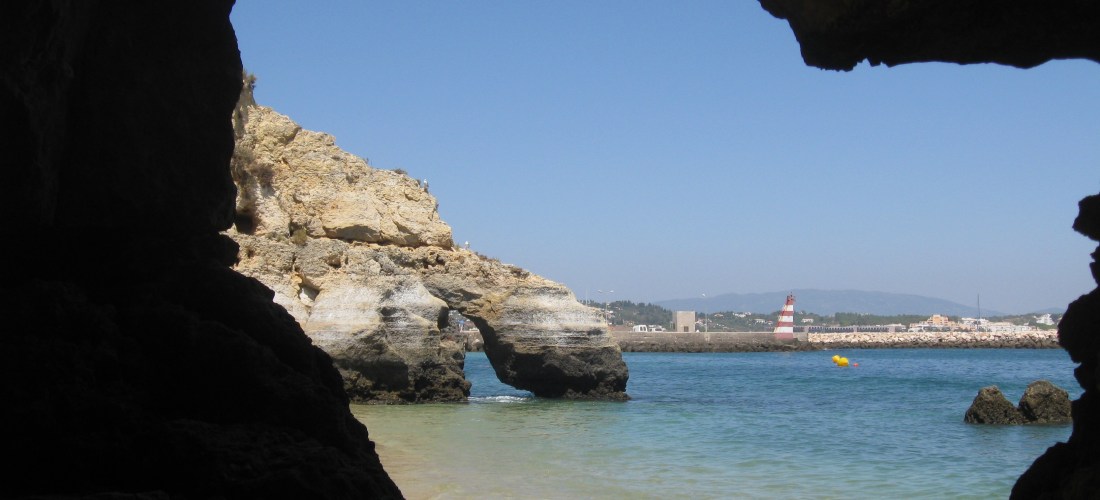
First of all,I’ll describe the major town of Algarve: Faro, principally known for the international airport where most of the tourist arrive and reach their resorts. Boring, distant from the sea and pretty catastrophically planned – this is how it seems at the first glance. Well, having lived and studied there for a good couple of months, I started to love it in a very special way.

It was definitely the smallest town I’ve ever lived in (around 100K inhabitants if you count in students of the University of Algarve), so this was an interesting experience itself. You could literally recognise everyone on the streets, and get to know local ‘characters’ very easily, which can be an interesting thing to live for a city person, like I am.

Good thing was that it was very convenient to discover inland, leeward and windward Algarve, taking EVA buses (yes, they are monopolists in Algarve with all of its characteristics, but they can get you pretty much everywhere), trains (if not on strike which was a thing to often do in 2011 at least) or the best way: your own car or bike. Portugal, especially in the South has still a very strong ‘driving culture’ , which may come as a shock to people used to commute by bike everyday (again: like I do). And the breathtaking views of the coast and neighbouring Alentejo simply calls for a bike ride!

Tiny, but picturesque city centre of Faro is full of cafeterias and bars, some of them back in a day were still pretty local, and inspired by the students culture. Remember that Thursdays are typical days for Portuguese students to go out and ‘sentir, viver, cantar a noite linda‘ (to ‘feel, live and sing the beautiful night’ – no other words could describe better the wit of it!).

If you are careful, among the typical Algarvian architecture you’ll notice places with patios and terraces with life music, jazz jams and poetry evenings, and world-class street art pieces. There is a beautiful park where you can chill from Algarvian heat, and if you are lucky, you will meet a peacock waving its tail, as if he wanted to cool down the air.

Last but not least: you should visit the Island of Faro, where the beach is, as well as take a chance to discover the Formosa river’s lagoon, with the plethora of fauna and flora (and flamingos!). Which leads us to the chapter no. 2: Leeward Algarve, to be continued soon.

Along the western shores of Santiago

Travel

The shores of Santiago were the first to face the Portuguese colonisation in West Africa. This is why this one of the ten islands of Cabo Verdean archipelago boasts the title of the historically most relevant. Santiago has been ‘competing’ for ages with São Vicente island, given that the port in Mindelo received a lot of traffic and was an important place for encounter of many nationalities, for trade and on the way to more distant lands. Whereas the history of Santiago is often more related to searching of the cultural identity of Cabo Verde, and the rituals over there considered more connected to West Africa.

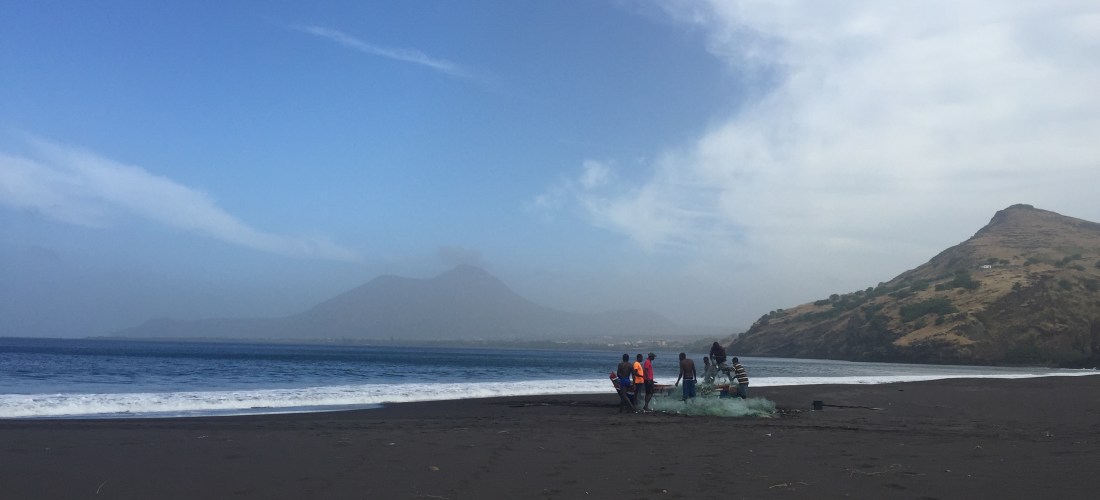
I had a chance to explore the shores that faced the colonisation, slave trade and trying to empower European, or Portuguese rules over this strategical island in the middle of the ocean back centuries ago. One of the most magical places is Ribeira Preta: a wide beach with the black, volcanic sand. To get there you need to hop on one of the colectivo trucks – forget about the safety, but don’t forget about admiring the mountain and ocean views on the winding, cobblestone road.

If you are lucky, you will notice the egg nests of the turtles, that picked this remote location for their reproductive purposes. It is now a protected area, as Cabo Verde is trying to preserve its ecological richness.

There are many fishermen villages on the way, such as Chão Bom, or Ribeira Preta itself, that are an ideal destination for the surfing and nature-seeking lovers.

Other than that, it is not too far away from the mountain side of Santiago Island, with a very interesting town of Assomada.

Last but not least, if you are in Praia, don’t miss visiting the UNESCO side of Cidade Velha (‘Old Town’) which was the first capital and port of Cabo Verde in the colonial times. You can find here the oldest road built in West Africa: the colourful Banana Street as well as Parochial Church and Cathedral.

I would like to end up the Cabo Verde saga with the memories that stay with me even after 3 months: the sound of the magnificent waves crushing on the remote shores, the smell of cachupa, the taste of wine and the sunsets over the neighbouring volcanic Fogo Island, the openness and hospitality of the locals, regardless of the poor conditions, and sound of crioulo – language, almost as gentle as the music that made its origin on this very special place on Earth. I hope to revisit these magic islands sooner or later, orbigadu e te logu, Cabo Verde!

Poeira de Deus

Travel

My journey to Cabo Verde is not over. After having visited the islands Santiago and Fogo, I started researching about the whole archipelago more and more and it seems that the journey through the available material is endless. Each island represents a very unique history, culture and even more often: a dialect.

So during the cold evenings in Berlin, drinking the flowery moscatel and refreshing white wine from the volcanic soil of Fogo I managed to find a documentary about the Rebelados – a community that inhabits the mountain ranges of Serra da Malagueta, and refuses the catholic religion, that was historically imposed on Cabo Verde by the Portuguese colonisation that lasted until 1974. I find it particularly interesting to see the beautiful mountain landscapes and fascinating celebrations, such as batuque.

https://www.youtube.com/watch?v=v8dt9lCSrTE

I have spent one day hiking around the Serra Malagueta range, and nearby towns such as Assomada and São Domingos, that are the centre of communication to/from Praia and Tarrafal. Also, they offer a bustling marketplaces with food, clothing and what-not. Having in mind that Cabo Verde is a remote archipelago with the majority of its population living abroad, and scarce possibilities for agriculture, many of the goods taken for granted in the Western societies, here are often a basic need to be fulfilled (such as food, or even water).

In some places rain has not appear in years. Even though Santiago is considered the island with the most tropical climate (and hence: cases of dengue, malaria and ultimately – zika are rare, but contrary to other islands of archipelago, may happen due to the presence of the mosquitos).

The magnificent views, however, and the hospitality (morabeza  – the word originating in Portuguese creole) can make up for the certain hostility of the climate on these remote islands. There is a beautiful story to it called ‘God’s powder’ (Poeira de Deus): on the 8th day after creating and sculpting the world, God threw the rest of the powder into the ocean, creating 10 islands of Cabo Verde. Believe or not, I think there is some truth in it.


Ilha de saudade – the sad stories from Cabo Verde

Travel

I have written quite a lot about the cheerful, colourful and paradisiac side of Cabo Verde. I believe there are even more adjectives to describe the archipelago, given that there are 10 islands, each of them of a very special characteristics. Yet there is one thing they have in common: the remoteness, from the African continent, not to mention the other parts of the world.

I was always attracted to remote islands, and even more when I read the book from Judith Schalansky. As she said in one of the interviews “Islands, especially those that seem most remote, are perfect places. They capture your imagination. For people who feel stressed, the island is an ideal image of a place where you can find peace, and where you can finally concentrate on what is really important. Maybe that’s where the question originates: What would you bring to a desert island? Each utopia wishes for a new beginning, for a chance to do everything differently. All it takes is untrodden territory and an answer to the question: Is another, better life possible?”.

Is it always the case though? Cabo Verde was uninhabited until the discovery and colonization by the Portuguese explorers in 15th century. Since then, they became an important shipping and commercial route, also when it comes to the shameful slave trade. This shed light on many people of Cabo Verde asking for their actual origins.

During my stay on the Santiago island, I was also faced with rather unusual place to visit during holidays: a concentration camp. I never heard about the concentration camp on the beautiful location like this, and more about the camp that was running for over 40 years. It was build in Tarrafal in 1936 by the authoritarian government of Salazar and was torn down only with the independence of Cabo Verde in 1975. There is an interesting documentary (“Memories from the camp of the slow death” – due to severe and dry conditions) about the survivors of the camp, mostly political prisoners from the former Portuguese colonies, e.g. Guiné Bissau, São Tomé or Angola:

The feeling of saudade – longing, separation (knowing that the majority of the Cabo Verde inhabitants live in diasporas outside of the archipelago: mostly in Paris and in Lisbon) is also reflected in mornasthe musical style originated in Cabo Verde or in the look of homeless dogs, wandering around from the town centres to the beaches, and all you need to do is to carefully get acquainted with them as you go along.

Thinking about it a bit more in-depth, Cabo Verde lays nowhere and at the same time, at the crossing of the routes from East and West, North and South and the influences of other cultures and political issues were reflected on this very special islands.


Tarrafal, o paraíso remoto

Travel

After my first two days in Praia, I followed up with a short trip to the neighbouring island of Fogo (port. fire) and Cidade Velha, the first colonial settlement in West Africa, but the real treat was only waiting for me on the other side of the Santiago Island.

We boarded North on the Christmas Eve, hoping to get to the other tip of the island before the dusk – not only because we wanted to have a traditional feast, but to safely cross the picturesque, yet dangerous Serra Malagueta mountain range. Dangerous if you drive in the pick up together with some other, 20 people inside (and a duck, in this particular case).

So we made it to Tarrafal, a town on the Northwestern tip of the island, the destination for the hippie families, laid-back wanderers who love watching the sunsets (if the weather conditions are great, you get to see the sun setting over the Fogo volcano – I didn’t take my camera when it happened, oh well), drinking coconut water, or surfing. There are three beaches in the bay of Tarrafal, and all of them offering white sand: a rarity on this island.

Tarrafal is also a very popular holiday destination for the Cape Verdeans – there were many families, often travelling all the way from France (where the biggest diaspora of Cape Verde is currently based) that were spending time until the festivities of Santo Amaro (happening on 15th January).

Having spent over 5 days in Tarrafal, I got accustomed to the local community: having visited both the church, as the local festivities (in the cultural centre with the Anonymous logo :)) of batucadeiras and eating out in the local bars and restaurants and celebrating in the Mercado Central. Contrary to Praia, here the time passed slowly, peacefully in the shadow of the funny Monte Gordo (eng. Fat Mountain) and I reflected back on it, talking to the fishermen, surfers, or homeless dogs on the beach and simply enjoying to learn about life in this little, remote paradise on Earth.