Lissabon Wuppertal Lisboa

Music

When I travel, I look at things with the naivety of a child‘ – this is one of the most inspirational quotes I’ve lately read when visiting the exhibition dedicated to Pina Bausch at Berlin’s Martin Gropius Bau museum. I would love to share my thoughts about my relationship with dancing and travelling, and how I think they walk hand in hand as a self-reflective experience.

I came back to exploring my passion of the contemporary dance since I’ve moved to Berlin, given my early background in ballet, and Pina Bausch has been always a great choreographer and dancer I’ve been looking up to. Creative, fierce and explorative – these are the characteristics of my perception of her pieces, which I could by now only look up on Youtube. However, I am more than thrilled that tomorrow I will see the legendary ‘Palermo, Palermo’ by the Tanztheater Wupperthal Pina Bausch which continues the work of this artist after her death in 2007.

What brings me to the Portuguese influences, is the piece that has been prepared specifically for the Expo 1998, which took place in Lisbon. Pina Bausch often referred the discovery of the world and own body as a similar experience and that’s why her theatre benefited a lot from the international cooperation (to name Sicily, Hong-Kong, Japan and Portugal as a few).

To me the plethora of the local and universal symbols combined with her excellent choreography bridges dance almost as a travel experience. That’s why in the darkest, coldest seasons I resort to the passion and strength that I can force through dancing. This kind of escape through travelling without moving has obviously not much to do with the dance theatre, but originates in the same need of discovery, rejecting the boundaries and limitations. This is why I can’t probably stop watching various versions of ‘The Rite of Spring’ while waiting for the sun to come up and change the season, as these are my usual thoughts around second half of December.


Warm sands of the Nordeste

Travel

On a grey day like today I like to time travel and re-discover the place where the warm sun, sand and water give shelter. The winter has not even started in Europe, but it’s been incredibly cold for over a month or so. Patience is key, and so are the winter time escapes. In one month I will be travelling to Hong-Kong, but before I need to find a way to deal with the dark and freezing reality.

To cheer myself up, I refrain to the memories of February 2013 when I travelled to Rio Grande do Norte, precisely Natal, Tibau do Sul and Praia da Pipa, the capital of the region and emblematic seaside towns in the North-Eastern part of Brazil.

Not only the warmth of the sun, sand and water, but also the cheerful and relaxed nature of the inhabitants made this location a perfect winter getaway destination.

I was lucky to live in a small condominio of the Atlantic forest between Praia da Pipa and Tibau de Sul where I was woken up by the birds chanting, and oh well, some insects.

The location is perfect for the surfers and wanderers. Wide beaches are perfect to walk around in between the high tides, and when it comes, it is amazing to simply jump on the prancha (surf board) and try your best fighting the powerful water element.

Years have passed and I remember the smell of the salty water, the taste of the local cuisine, the view of the bonfires burning at night at the beach and the songs of the local vendors. I definitely plan to come back, possibly visiting the beautiful archipelago of Fernando da Noronha islands. Stay tuned!

Brazilian Jazz Carnival in Berlin

Music

Two years have passed in an Augenblick (like Germans like to define “the time that flies”) since I have moved to Berlin. I would lie, if I said I don’t miss Barcelona, Brazil, Portugal and my hometown Poznan from time to time. Travelling is relatively cheap and easy these days, at least to some of these locations though, so I don’t happen to be homesick too often to be honest.

Especially that I feel very happy where I am now, both personally, and professionally, and Berlin keeps surprising me every day with its amazing cultural offer. I even realised how I can cope best with the dark and cold days throughout roughly half of the year. Concerts and dancing are among my most powerful weapons!

It is also fair to say, that during these two years, I have met amazing people from all over the world sharing my passions and at the same time showing new perspectives, opening my mind and enriching my life.

More importantly, I keep speaking Portuguese. Be it at work with my Portuguese-speaking colleagues (or those wanting to simply learn and practice!), be it with my good old or newly acquired friends. Berlin has an incredible offer of Latin American movie festivals as well as concerts of all the music genres,  out of which I happened to see two of my Brazilian jazz gurus this year already.

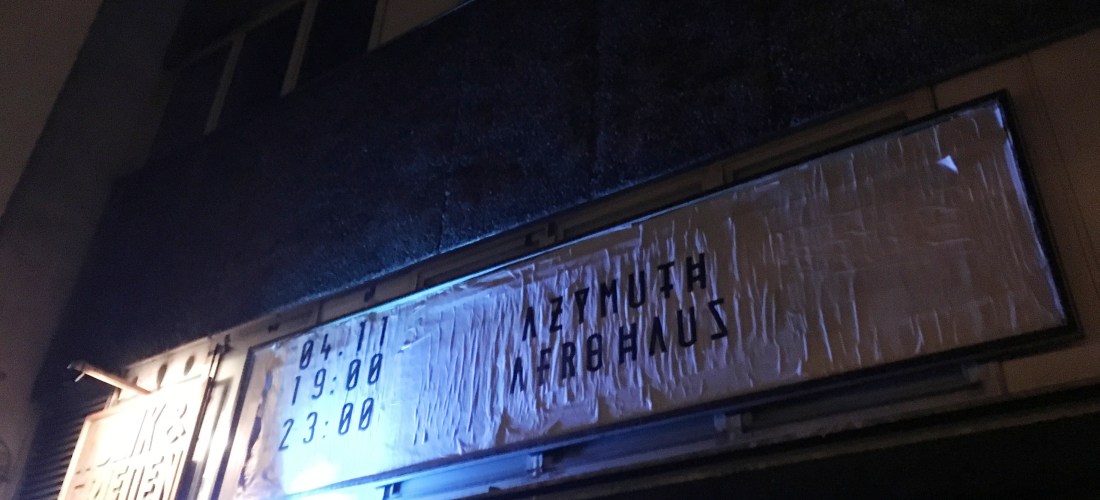
I am very honoured to have seen Ed Motta earlier this year, and Azymuth trio only yesterday. There are very few artists which inspired so many DJs and producers much as they did. Actually, I can’t think of any dancefloor which wouldn’t go crazy if a DJ dropped ‘Jazz Carnival’, regardless of the location. As a consequence, their tracks have been often remixed and incorporated into legendary mixes. I was hoping to see them live for a very long time, especially when I noticed that they were featured at the Boiler Room session and announced their European tour.

A thought that occurred to me yesterday, was about the universal and timeless aspect of music. Even though Azymuth members could be my grandparents, and most of their tracks are much more older than I am, their sound is moving the crowds to a state of frantic trance.

Muito obrigada, Maestros and long live Brazilian jazz!

Nascer do sol – Portuguese encounters in Japan

Music, Travel

I am happy to say that I spent the majority of this month in amazing Japan. I have dreamt about this trip for a long time and it has finally come true. Great part of it was dedicated to some musical research, as I knew that Japan is great source of digging the vinyl shelves and a lot of the DJs and producers I respect researched quite a lot on the streets of Tokyo, Kyoto or Osaka.

I was always very intrigued by the fact that there is so much Portuguese speakers living in Japan. Partly, this may be due to massive immigration of Brazilian nationals to industrial cities like Nagoya, and the other way round a lot of Japanese migrating to Brazil. Actually, my first encounter with the Japanese culture was in 2013 in Liberdade, São Paulo’s district, home of thousands of Japanese descendants. Yes, I got to use the famous Japanese toilet ToTo there! But speaking seriously, I discovered Portuguese influences in Japanese music early when I discovered new jazz producers in the early 2000s, to name a few: Hajime Yoshizawa, or Kyoto Jazz Massive which I would like to list as sources of my inspiration.

There are influences reaching fur beyond music. While visiting the city of Nagasaki, I learned that for years, it has been an important port for various sailors from the European countries, to name the Dutch, the Spanish and the Portuguese on the far East. After the Portuguese, a sweet memory was left: a sponge cake called Castella

Finally, during my trip I got to know pretty amazing Japanese people interested in music: from Detroit techno, through soulful hip-hop up to exotic influences of music of Cabo Verde. It is hard to summarise the variety of all these encounters in one blog post, but I wanted to encourage everyone to discover the country through the sound and multicultural influences. And even if the country of the Rising Sun is one of the most remote and isolated places, it’s full of contrasts, inspirations and definitely is a great place to discover new music styles.


Lisboa does not love?

Personal, Travel

First of all: this post is all about love. My everlasting love for Lisbon.

Secondly, it is about sustainable tourism, gentrification and all the negative things that make me think if I should continue writing this blog ever more.

Lastly, it is about the sadness about losing the authentic touch for which I initially fell for when I decided to move to that city, and re-visit almost each year.

So what happen this month? I had a chance to travel to Oporto where not so much changed and then spend a couple of days in Lisbon for the Lisb:On festival and visiting my friends and favourite places.

While I’m very interested to see the rising number of people talking about Lisbon’s unique atmosphere, as well as observing the interest of the investors in the start up scene out there that make the city a living entity attracting expats and creative workforce, I am very worried about Lisbon’s entering solely commercial path.

I’m tired about being bothered by street selling, exactly the same like in Rome, Barcelona or Venice, being approached by tuk-tuk drivers (what does it have to do with Lisbon anyway?!) or being treated like a tourist anywhere I go. Even if I know the city well and speak Portuguese. And don’t act out like a prototype tourist. Website Lisboa-Does-Not-Love.com lists the reasons why massive tourism is destroying the city and its morale and acts as the code of conduct while in Lisbon, but will it stop the massive tourism craziness?
I had to spit out my frustrations about the changing landscape of one of my beloved cities, and pose an open question: should we advertise for places we think are unique? Of course the sole act of visiting will not destroy the well-kept secret, but the scale of reach out via travel/lifestyle blogs may actually lead to it.
That’s why with mixed feelings, I’d like to leave you thinking about which direction can Lisbon take to prevent from becoming another tourist-fuelled city like London, Barcelona or Venice? I care too much about Lisbon to simply never visit again, as this replicates the scheme for which I moved out from Barcelona and hope never be forced to relocate from Berlin.
I love all Lisbon, much as I do love Barcelona and can’t keep falling in love with Berlin. What I’m just pretty sure about is that they don’t love massive tourism.

After the rain comes sun in Porto

Travel

It’s definitely high time to re-visit the city of Oporto, or o Porto in Portuguese (and hence the English name, I guess). My Lusofonetica project has been running for over 2 years now (can’t believe it flies so fast!) and I simply can’t believe that I haven’t found time to share my impressions about this beautiful place.

I’ve first visited it in 2007 during my Inter Rail trip around Europe combined with taking two weeks off in the Beira Alta region to sample a live of a volunteer-archeologist in the tiny and extremely hot village of Coriscada which I guess this deserves a separate post itself. I traveled to Porto via very spectacular train ride alongside the Douro Valley which I’d recommend everyone to take. Since then I paid three more visits in Porto, but unfortunately they were mostly related to connecting flights so literally ‘flying visits’.

During these short stays I managed to soak only a sample of the city’s atmosphere and indeed, to feel the glorious difference between the North of Portugal and the South. Contrary to the famously changing weather, I always got a very warm welcome from the bar or restaurant owners, and I made very good experience with the people from Porto whom I’ve met all over the world.

So almost in one week from now I’ll be in Porto again, this time for 2 (!) days, hoping to compare my impressions from the previous stays, eat delicious francezinha, wander around the wine cellars, and potentially hit one of their clubs in search of the electronic music originated from ‘the London’ of Portugal.

Why is it so? As I mentioned, it rains here much more often than in the other parts of Portugal, and the light/style of the city somewhat reminds England. It’s also due to the historical presence of the British entrepreneurs which were involved in setting up the most famous port wine companies in this region, that the city has this vibe.  It has long history of influence by the industrial architecture (like Tour Eiffel of Paris), and been a centre for economical development of Portugal. It’s also been an important cultural centre – and a good example of it could be an impressive Casa da Música.

So I hope to come back with a fresh set of thoughts and observations, hopefully on the sunny side this time: até logo o Porto!


Stay True – Boiler Room in Portugal

Music

In my last post I mentioned a lot about how Afrolusobrasilian culture is present in Lisbon. You may also have noticed that I am getting regularly inspired by the Portuguese capital when it comes to sound searching.

I am very happy to confirm that in September I’ll be visiting LISB:ON festival, where I will have a chance to see Brazilian artists like Marcos Valle or Azymuth, not so easy to spot at the concerts these days. This festival, being a part of a summer project called Jardim Sonoro (pt. Sound Garden), will also attract other ambitious electronic music producers such as Matthew Herbert or Dixon, and here is why I would like to dedicate a short paragraph to electronic music in Portugal.

Since currently I’ve been living in Berlin where electronic music can be heard even in grocery shop, no other place on Earth can compete with DJ line ups and a density of EDM producers per square km. However, world can definitely be grateful to Lisboa – Luanda connection for bringing in some truly crazy rhythms to the dancefloors.

Lately, I have taken part in the music production showcase with Dengue Dengue Dengue who were also hosted by the local Boiler Room edition Stay True. More of the inspirational sounds can be seen from its archive:

Stay True: Portugal edition took place a month ago and besides the Dengue Dengue Dengue duo hosted Buraka Som Sistema as well as DJ Marky  whose Boiler Room back in Brazil is already unforgettable classic of its kind.

I am definitely looking forward to re-discovering Lisbon (I can do it anytime anyway at anytime) at my own bpm pace, simply enjoying the musical and cultural diversity.

I hope that thanks to the initiatives like Stay True this city will get even more visibility for the music aficionados.


Nôs Terra

Travel

Lisbon is especially interesting place for those who would like to discover not only Portuguese, but also Afrolusobrazilian culture.

It is a perfect place if you go to different Portuguese-speaking destinations, either as a stopover location or a final destination. To me Lisbon served as both for the past couple of years. After a brief episode of living in Portugal, I always felt certain nostalgia (cliche term of saudade is definitely relevant here) after this place and longing to travel to Portuguese-speaking destinations.

So last Christmas I gave my heart to the archipelago of Cabo Verde and of course, made a stopover in Lisbon. Apart from some very interesting animation show at the Praca de Comercio, there were some other highlights of that short stay, such as joining capoeiristas by the sunset.
This is where a friend of mine, who is very influenced by afrolusobrasilian culture, introduced me to some cultural associations and places where typically descendants of Portuguese-speaking African countries organize their concerts, events or festas.
I was also lucky to try the typical food from Cabo Verde: cachupa, before actually reaching my final destination. Be it Cabo Verde, Sao Tome e Principe, Moçambique, Angola or Guiné-Bissau, or even further in the world: Timor Leste, Goa or Macau – you will find all the places inside Lisbon, like travelling without moving.
Obviously, this has to do a lot with the history, and multiculturalism of Lisbon is an effect of post-colonialism processes. Upon my arrival from Cabo Verde I started digging deeper the topic of the descendants of the African countries living in Lisbon. ‘Nôs Terra’ shows the day-to-day specificities and also struggles of the Caboverdean community in Lisbon. It shows processes familiar to everyone who ever relocated, the in-between state of not belonging anywhere (the country of origin and current location).
I hope though that the unique multiculturality of Lisbon will stay a value itself. Music industry has already spotted Lisbon as one of the most interesting places in the world and so is becoming with art in general. There is no place like Lisbon, colourful, diverse and full of inspiration.

All…garve pt.3: Barlavento

Travel

May is already here, summer is forthcoming soon (even in Berlin!), and I am still not done with describing one of the most charming locations in Europe: Algarve in Portugal, where I was lucky to travel and live for a while.

So far I have dedicated most of the entries to the Leeward, Eastern side of the Southern Portuguese coast, given my sympathy and know-how of Faro and Olhão regions as well as Formosa river’s natural wonders.

The other side of this wonderful 100-km coastline stripe: Barlavento (eng. Windward), on the West, has been traditionally recognised by the surfers, beach testers and festival-lovers (famous festival Sud Oeste, taking place: as the name says: in the South-West Portugal). Infamously, this part of Algarve has been also known as the land of the massive tourism and disappeared child called Maddie few years ago that made this region a pretty bad press. With or without the scandal’s impact, I would avoid places like Portimão or Albufeira which are huge beach resorts with soulless architecture for rather lazy, all-inclusive kind of tourism. Sad places to see in such an authentic country like Portugal.

Coming back to the wonders of Barlavento, I would name a few: coming there outside of the season would be probably the most beautiful experience, since massive rocks and strong winds, while few people around create altogether a very dramatic and picturesque atmosphere.

My to-do list would include wandering around little towns with rich history, such as Aljezur, Lagos or Sagres (famous also for being a name of one of two most popular Portuguese beers!). For the romantic spirits, I would absolutely recommend facing the sunset at the most South-Western tip of Europe: Cabo de São Vicente. Whereas villages like Raposeira or Porto das Barcas would be on my surfing paradise list.

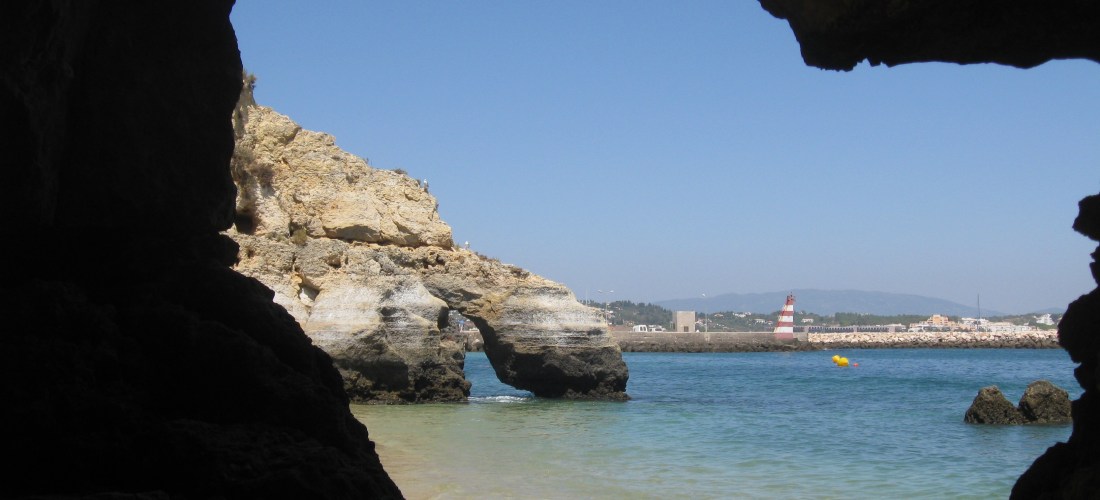
Last but not least, even in the surroundings of Lagos, one can find very particular beaches – among the numberless and funnily-shaped rocks. Beware that Barlavento: as the name indicates is the land for wind-loving people, but if you do, you won’t be disappointed by the natural diversity of this coastline.


All…garve pt.2: Sotavento

Travel

Following up on my post about Far Out Faro, I would love to focus on the Leeward (port. Sotavento) side of the Algarvian coast. This part of the region includes Faro itself, but also picturesque towns like Tavira, Loulé, Olhão or Vila Real do Santo António, bordering with Spain by the Guadiana river.

Leeward coast is particularly close to me, as during the time I lived in Faro, I was often visiting the neighbouring towns, as well as inland points of interest. Worth mentioning that I stayed for a couple of weeks in the village called Pechão on a volunteering service for the local communities, preparing the international part of the anual Festa. If you visit this region between spring-autumn, you will be amazed by the quantity of festas, local festivities, for different reasons: fishing season, cattle growing, and much more (and even more abstract – as there is always a good way to celebrate good times!). Many of these festivities are closely linked with the Catholic festivities (like name days of various Santos, patrons) but they incorporate a lot of ludic elements.

During my stay in Faro and Pechão, I was exposed to some very forward-thinking manifestos of the left wing activists, promoting well-being and equality on different levels. Worth mentioning that this part of Algarve is interesting for various, often borderline awkward reasons. The traditions of building bone chapels in small villages, the architecture showing years of different impact of various cultures and religions as well as food are very recommendable.

Moreover, Algarve is not only, as majority may think, the picturesque coast. Bordering with Alentejo you may find gems like Pego do Inferno, crystal clear waters waterfalls on the hilly trekking path. If you have time, I would recommend cycling around the region, as my Portugal-loving friend does it actually quite regularly!

Last but not least, you might consider taking a local ferry to several islands around Faro and Olhão where you can watch birds (including storks and flamingos!) and enjoy the remoteness. And, oh well, the sunsets… Or this dog, selling cigarettes in the local loja (port. grocery store).

If you are still not done with the beauty of the South of Portugal soon I will take you on the trip to the West side of the coast: Barlavento.