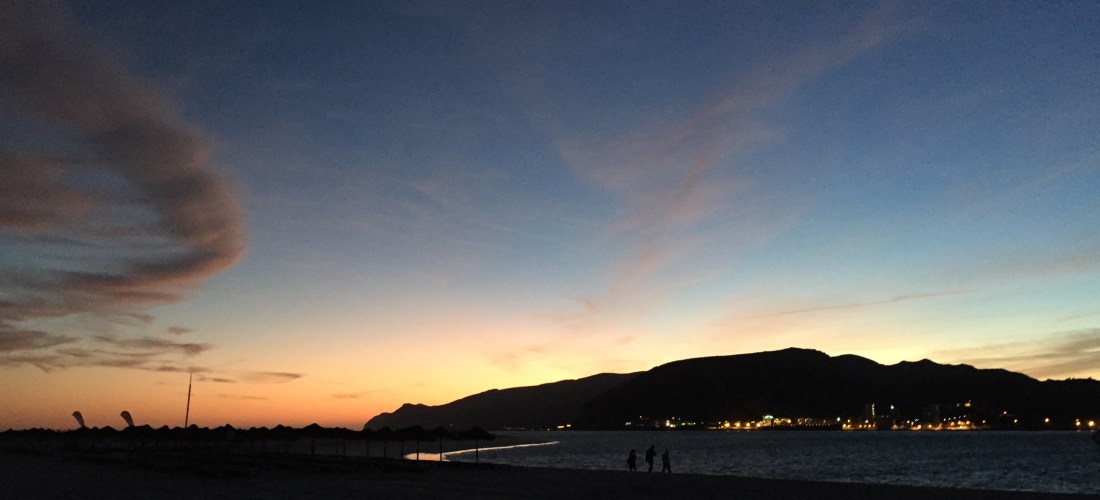
All…garve part one: far out Faro

Travel

It’s been over 5 years ago I made an experience of living almost literally by the Atlantic Ocean shore in Faro, where the South-Western European continent ends. It was a pretty stress-free life of an Erasmus student in what we used to call ‘Iberian California’, even though at the end most of us had to come back to some sort of adult life. I was lucky enough to host my parents and friends from Poland, Chile, UK and Spain during these months which made it even more special.

Lately some friends who are going to drive through South of Portugal asked me to describe my favourite places I collected and saved in my memories during these couple of months. I have to say that going through my photo collection evoked strong, beautiful freeling and  that even though time has passed, Algarve stays in an important place of my heart.

First of all,I’ll describe the major town of Algarve: Faro, principally known for the international airport where most of the tourist arrive and reach their resorts. Boring, distant from the sea and pretty catastrophically planned – this is how it seems at the first glance. Well, having lived and studied there for a good couple of months, I started to love it in a very special way.

It was definitely the smallest town I’ve ever lived in (around 100K inhabitants if you count in students of the University of Algarve), so this was an interesting experience itself. You could literally recognise everyone on the streets, and get to know local ‘characters’ very easily, which can be an interesting thing to live for a city person, like I am.

Good thing was that it was very convenient to discover inland, leeward and windward Algarve, taking EVA buses (yes, they are monopolists in Algarve with all of its characteristics, but they can get you pretty much everywhere), trains (if not on strike which was a thing to often do in 2011 at least) or the best way: your own car or bike. Portugal, especially in the South has still a very strong ‘driving culture’ , which may come as a shock to people used to commute by bike everyday (again: like I do). And the breathtaking views of the coast and neighbouring Alentejo simply calls for a bike ride!

Tiny, but picturesque city centre of Faro is full of cafeterias and bars, some of them back in a day were still pretty local, and inspired by the students culture. Remember that Thursdays are typical days for Portuguese students to go out and ‘sentir, viver, cantar a noite linda‘ (to ‘feel, live and sing the beautiful night’ – no other words could describe better the wit of it!).

If you are careful, among the typical Algarvian architecture you’ll notice places with patios and terraces with life music, jazz jams and poetry evenings, and world-class street art pieces. There is a beautiful park where you can chill from Algarvian heat, and if you are lucky, you will meet a peacock waving its tail, as if he wanted to cool down the air.

Last but not least: you should visit the Island of Faro, where the beach is, as well as take a chance to discover the Formosa river’s lagoon, with the plethora of fauna and flora (and flamingos!). Which leads us to the chapter no. 2: Leeward Algarve, to be continued soon.
Along the western shores of Santiago

Travel

The shores of Santiago were the first to face the Portuguese colonisation in West Africa. This is why this one of the ten islands of Cabo Verdean archipelago boasts the title of the historically most relevant. Santiago has been ‘competing’ for ages with São Vicente island, given that the port in Mindelo received a lot of traffic and was an important place for encounter of many nationalities, for trade and on the way to more distant lands. Whereas the history of Santiago is often more related to searching of the cultural identity of Cabo Verde, and the rituals over there considered more connected to West Africa.

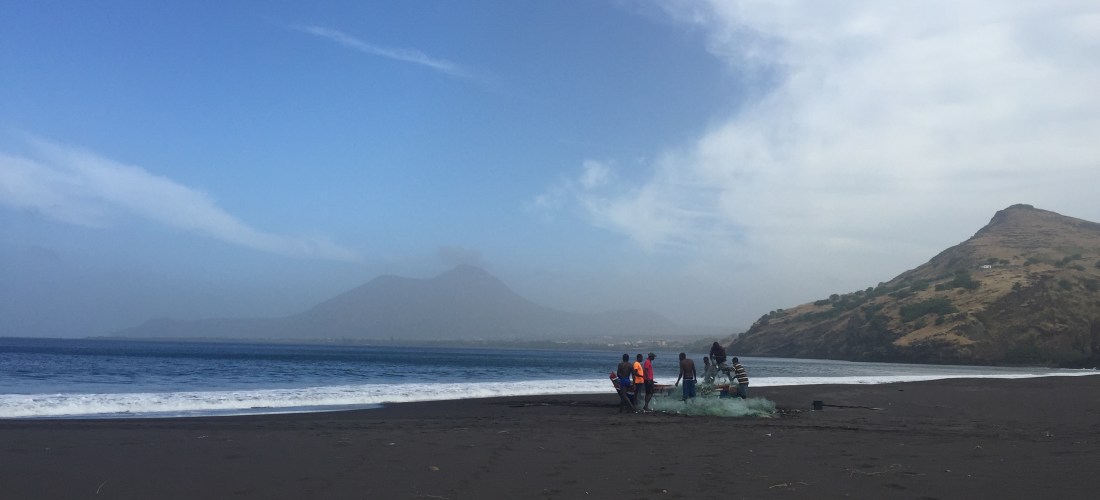
I had a chance to explore the shores that faced the colonisation, slave trade and trying to empower European, or Portuguese rules over this strategical island in the middle of the ocean back centuries ago. One of the most magical places is Ribeira Preta: a wide beach with the black, volcanic sand. To get there you need to hop on one of the colectivo trucks – forget about the safety, but don’t forget about admiring the mountain and ocean views on the winding, cobblestone road.

If you are lucky, you will notice the egg nests of the turtles, that picked this remote location for their reproductive purposes. It is now a protected area, as Cabo Verde is trying to preserve its ecological richness.

There are many fishermen villages on the way, such as Chão Bom, or Ribeira Preta itself, that are an ideal destination for the surfing and nature-seeking lovers.

Other than that, it is not too far away from the mountain side of Santiago Island, with a very interesting town of Assomada.

Last but not least, if you are in Praia, don’t miss visiting the UNESCO side of Cidade Velha (‘Old Town’) which was the first capital and port of Cabo Verde in the colonial times. You can find here the oldest road built in West Africa: the colourful Banana Street as well as Parochial Church and Cathedral.

I would like to end up the Cabo Verde saga with the memories that stay with me even after 3 months: the sound of the magnificent waves crushing on the remote shores, the smell of cachupa, the taste of wine and the sunsets over the neighbouring volcanic Fogo Island, the openness and hospitality of the locals, regardless of the poor conditions, and sound of crioulo – language, almost as gentle as the music that made its origin on this very special place on Earth. I hope to revisit these magic islands sooner or later, orbigadu e te logu, Cabo Verde!

Women Who Travel

Personal, Travel

This post is not dedicated to any particular journey I’ve made. This post is about women who travel: independently, in a creative and respectful way. Just the way they live their lives. They are no abstract protagonists, they are represented by women I know in my family (starting from my awesome Mother), my friends and colleagues, and finally: myself. However, the happenings from last week in Ecuador proved how fragile our freedom for travel is. I want to dedicate my own personal Women’s Day tribute for the memory of all the female travellers who lost their lives because of sexism, misogyny and fundamentalism.

There is so much anger in me, although initially there was simply immense sadness when I heard about the unbelievably brutal and pointless murder of two Argentinean women travelling in Ecuador. Sadness gave way to anger when I analysed the language of the press coverage: initially putting the blame on the travellers to be behave reckless, inappropriate, and visiting the dangerous places. Calling out to parents, why the hell they let them travel alone. In 2016, really?!

This could be me. I travelled alone (not even with the other friend!) thousands of miles in my life, simply because I like discovering things at my own pace. Other times, I travelled ‘only’ with my Mother, or my female friend(s), and I met so many great, like-minded women on my way! I always try to inform myself about the place I’m travelling to, the customs and things to take into consideration, and I never seek out the dangers for the sake of adrenaline rush. Still, I was mugged only once, the luggage that got lost, got back to me through the seven mountains and jungle, and I never had problems with unwanted sexual attention, as I knew how to handle such situations within clean communication and in a respectful way, if needed.

Still, I have to consider myself luck, as this shit is still happening, at a very creepy scale. Unnamed authorities calling us to cover our bodies, be accompanied by men or family or stay at home at night, as if we were an object to carry. I am very frightened to see this conservative trend taking over in many countries around the world and I want to voice my scream against the freedom of women around the world, the explorers, the curious, the mindful and the half of this beautiful world!

Don’t let us scare off, close at home, force into relationships for the only sake of protection (disclaimer: I don’t have anything against the great couples, I’m just putting a broader context!) which ultimately leads into manipulating us more easily. At no other times women had a better financial situation and travelling was considered easier than nowadays, in general. I would like to embrace all my experiences that made me a person that I am now: open for changes, diversity and uncertainty in life, able to risk and step out of my comfort zone to deep dive into something new. And I would like to thank to all the amazing people I met on my way that acknowledged the fact I love travelling alone, and making it an unforgettable story of its own.

RIP Maria José and Marina.

Poeira de Deus

Travel

My journey to Cabo Verde is not over. After having visited the islands Santiago and Fogo, I started researching about the whole archipelago more and more and it seems that the journey through the available material is endless. Each island represents a very unique history, culture and even more often: a dialect.

So during the cold evenings in Berlin, drinking the flowery moscatel and refreshing white wine from the volcanic soil of Fogo I managed to find a documentary about the Rebelados – a community that inhabits the mountain ranges of Serra da Malagueta, and refuses the catholic religion, that was historically imposed on Cabo Verde by the Portuguese colonisation that lasted until 1974. I find it particularly interesting to see the beautiful mountain landscapes and fascinating celebrations, such as batuque.

I have spent one day hiking around the Serra Malagueta range, and nearby towns such as Assomada and São Domingos, that are the centre of communication to/from Praia and Tarrafal. Also, they offer a bustling marketplaces with food, clothing and what-not. Having in mind that Cabo Verde is a remote archipelago with the majority of its population living abroad, and scarce possibilities for agriculture, many of the goods taken for granted in the Western societies, here are often a basic need to be fulfilled (such as food, or even water).

In some places rain has not appear in years. Even though Santiago is considered the island with the most tropical climate (and hence: cases of dengue, malaria and ultimately – zika are rare, but contrary to other islands of archipelago, may happen due to the presence of the mosquitos).

The magnificent views, however, and the hospitality (morabeza  – the word originating in Portuguese creole) can make up for the certain hostility of the climate on these remote islands. There is a beautiful story to it called ‘God’s powder’ (Poeira de Deus): on the 8th day after creating and sculpting the world, God threw the rest of the powder into the ocean, creating 10 islands of Cabo Verde. Believe or not, I think there is some truth in it.


Ilha de saudade – the sad stories from Cabo Verde

Travel

I have written quite a lot about the cheerful, colourful and paradisiac side of Cabo Verde. I believe there are even more adjectives to describe the archipelago, given that there are 10 islands, each of them of a very special characteristics. Yet there is one thing they have in common: the remoteness, from the African continent, not to mention the other parts of the world.

I was always attracted to remote islands, and even more when I read the book from Judith Schalansky. As she said in one of the interviews “Islands, especially those that seem most remote, are perfect places. They capture your imagination. For people who feel stressed, the island is an ideal image of a place where you can find peace, and where you can finally concentrate on what is really important. Maybe that’s where the question originates: What would you bring to a desert island? Each utopia wishes for a new beginning, for a chance to do everything differently. All it takes is untrodden territory and an answer to the question: Is another, better life possible?”.

Is it always the case though? Cabo Verde was uninhabited until the discovery and colonization by the Portuguese explorers in 15th century. Since then, they became an important shipping and commercial route, also when it comes to the shameful slave trade. This shed light on many people of Cabo Verde asking for their actual origins.

During my stay on the Santiago island, I was also faced with rather unusual place to visit during holidays: a concentration camp. I never heard about the concentration camp on the beautiful location like this, and more about the camp that was running for over 40 years. It was build in Tarrafal in 1936 by the authoritarian government of Salazar and was torn down only with the independence of Cabo Verde in 1975. There is an interesting documentary (“Memories from the camp of the slow death” – due to severe and dry conditions) about the survivors of the camp, mostly political prisoners from the former Portuguese colonies, e.g. Guiné Bissau, São Tomé or Angola:

The feeling of saudade – longing, separation (knowing that the majority of the Cabo Verde inhabitants live in diasporas outside of the archipelago: mostly in Paris and in Lisbon) is also reflected in mornasthe musical style originated in Cabo Verde or in the look of homeless dogs, wandering around from the town centres to the beaches, and all you need to do is to carefully get acquainted with them as you go along.

Thinking about it a bit more in-depth, Cabo Verde lays nowhere and at the same time, at the crossing of the routes from East and West, North and South and the influences of other cultures and political issues were reflected on this very special islands.


Tarrafal, o paraíso remoto

Travel

After my first two days in Praia, I followed up with a short trip to the neighbouring island of Fogo (port. fire) and Cidade Velha, the first colonial settlement in West Africa, but the real treat was only waiting for me on the other side of the Santiago Island.

We boarded North on the Christmas Eve, hoping to get to the other tip of the island before the dusk – not only because we wanted to have a traditional feast, but to safely cross the picturesque, yet dangerous Serra Malagueta mountain range. Dangerous if you drive in the pick up together with some other, 20 people inside (and a duck, in this particular case).

So we made it to Tarrafal, a town on the Northwestern tip of the island, the destination for the hippie families, laid-back wanderers who love watching the sunsets (if the weather conditions are great, you get to see the sun setting over the Fogo volcano – I didn’t take my camera when it happened, oh well), drinking coconut water, or surfing. There are three beaches in the bay of Tarrafal, and all of them offering white sand: a rarity on this island.

Tarrafal is also a very popular holiday destination for the Cape Verdeans – there were many families, often travelling all the way from France (where the biggest diaspora of Cape Verde is currently based) that were spending time until the festivities of Santo Amaro (happening on 15th January).

Having spent over 5 days in Tarrafal, I got accustomed to the local community: having visited both the church, as the local festivities (in the cultural centre with the Anonymous logo :)) of batucadeiras and eating out in the local bars and restaurants and celebrating in the Mercado Central. Contrary to Praia, here the time passed slowly, peacefully in the shadow of the funny Monte Gordo (eng. Fat Mountain) and I reflected back on it, talking to the fishermen, surfers, or homeless dogs on the beach and simply enjoying to learn about life in this little, remote paradise on Earth.


Badu is always comin’ for real

Music, Travel

This is not a post about Erykah Badu’s new mix. Badu is a creole name for the people of the biggest island of the Cape Verde archipelago: Santiago, and to them I would like to dedicate this post.

Crowd, chaos, waiting: in three words that could summarize pre-Christmas time at the arrivals lounge of the Nelson Mandela Airport in the capital of Cape Verde, Praia. The guards, customs and military at the airport mingle so much that it is not that easy to distinguish who is working there and who is ‘just chillin’. I still have a lot to learn: but beyond words and gestures I catch the first meanings of morabeza, famous hospitality and relaxed attitude of Cape Verdeans. On the top of that, my luggage is lost, but oh well, after 2 hours of waiting for visa stamp that does not even surprises me.

What surprises me though is that the owner of the apartment I briefly spoke over e-mail, waits patiently in the arrival lounge though and shows no trace of being nervous, or upset after over 3 hours of waiting. He took this time to chat with some other people waiting over a midnight coffee. On the way we take some other people, just for the sake that they’ve been heading the same direction, no matter that it’s long after midnight. Even though I am tired like never before, I am so happy it’s 3 am and the temperature is over 25 degrees. And I slowly see some logic in the what I defined as chaos.
After I wake up and have a breakfast with my beloved mangoes and papaias, I head to the biggest market of Praia: Sucupira to get some ‘essentials’ that were left behind in my registered luggage. Sucupira is a labirynth where you can get anything from chinelos (aka ‘Havaianas’) to running piglets. Not surprisingly, clothes are rather expensive: as there is close to nothing produced in Cabo Verde, most of them come from Paris where, according to the estimations, there is the biggest diaspora of caboverdianos. Next to bikinis, there are figures of black Jesus and black Maria, someone fries chicken wings in piri-piri and the sounds of funana are all over the place.
I leave Sucupira to find some quiet shelter in the uptown district Plateau, historically second settlement in West Africa after Cidade Velha which I will describe in the forthcoming posts. There, in a bar 5al da Musica I take a musical tour through the history of Cabo Verde: from B’Leza to Sara Tavares. And in the meantime, visiting musician from Angola and Lisbon practice their evening jam… I get goosebumps while hearing the fresh sounds and inspirations I would never hear about in Berlin. And so my first 24h in Praia are gone, I order my last coffee, chat with the musicians feeling very balanced, inspired and happy, almost like Bad’u. 
Si ka badu ka ta biradu!

Téra Lonji – a distant land

Music, Travel

Tired of the 2015: corporate year end’s closure, and pointless rush around Christmas festivities in Berlin, I am counting days to teleport myself to a very distant and different place: Cape Verde’s (port. Cabo Verde) island of Santiago.

Why Cape Verde? First of all, because of its creole music: morna, representing very melancholic sounds of the islands lost somewhere in the middle of the Atlantic Ocean. Once very strategic location given the geographical discoveries, sad history of colonialism, and slave trade. Now left remotely westbound of Africa, the art and music is depicting this lone feeling. I am very much looking forward to hunt for some rare records of yet undiscovered, powerful voices of the afrobeat.

Secondly, because of the ocean, the wind and the scorching sun. Climate of Cabo Verde might get very rough, given the strong winds blowing in this area, but I can’t imagine a better weather, especially if the waves make it perfect for the surfers.

Last but not least: for the language – the most outspoken language on Cabo Verde is crioulo (creole), and given its French and Portuguese roots, is especially interesting for me to encrypt. And so within one week I will be boarding my flight to Praia, the capital of Cabo Verde, full of the sodade e bondade (longing and goodness) feeling. Stay tuned for the stories from the Ilha de Santiago upon my arrival in January!

Grandola jazz

Music

Thanks to the XJazz Festival in Berlin I discovered a very interesting musician: Studnitzky and his composition ‘Grandola’. I fell in love with these sounds from the very beginning:

Grandola, a Portuguese town located in the Setubal municipality, has got its place in the history of music for some other reasons though. I was visiting these wonderful region in September, on my way to the controversial settlement on the Troia Peninsula. Grandola became a symbol after the non-violent 25th Aprtil of the ‘Carnation revolution’ thanks to the song performed by Zeca Afonso. ‘Grandola Vila Morena’ tells a story about the fraternity among the people of this town and was broadcasted at the outbreak of the peaceful revolution in Portugal.

This song, associated with one of the brightest moments of the Portuguese history has some uplifting lyrics about the brotherhood.

Grândola, vila morena
Terra da fraternidade
O povo é quem mais ordena
Dentro de ti, ó cidade
O povo é quem mais ordena
Terra da fraternidade
Grândola, vila morena
Em cada esquina um amigo
Em cada rosto igualdade
Grândola, vila morena
Terra da fraternidade
Grândola, vila morena
Em cada rosto igualdade
O povo é quem mais ordena
À sombra duma azinheira
Que já não sabia a idade
Jurei ter por companheira
Grândola a tua vontade
Jurei ter por companheira
À sombra duma azinheira
Que já não sabia a idade

Relaxa – how to get through the cold and dark days

Music, Personal

This very laid-back and relaxing post should help to wipe out all the Brazilian-homesickness feelings. Especially in the winter months in Europe.

I personally first escaped the Central European winter a few years ago with relocating to the South of the continent (with a short but life-changing period of living in Brazil), and last year came back to the same four-season pattern in Berlin. I find it physically challenging to get through until end of March or so, but have found my ways. German way of saying “it’s not cold, you’re only dressed inappropriately” helps to shift the focus too. I have to say that having survived summer in Arctic, helped me too.

So, having gathered warm clothes, bought 20 types of tea and mate, I can say I’m prepared. But the crucial thing to survive the dark and cold days is to… listen to Brazilian music!

So let me share you my top 3 tracks that have magically spelled out flu, sore throat, but also depression, loneliness and other side effects of the European winter:

“Relaxa” – the message is clear either if you want to chill out after a tough week, if you’re feeling weak, or contrary – in a party mood. Painel de controle will get you in this upbeat and alegre mood.

“Na Boca do Sol” – reminds me of my Cidade Interior, Brasilia, I used to live for a while. This place, apart from being an architectural and social phenomenon, has shown me the most beautiful and unforgettable sunrises and sunsets.

“Chegou de Bahia” – of course, who wouldn’t be happier if visiting Bahia

Here I’d like to mention that next month I’ll be travelling to Africa to relax, unwind on the Cape Verde, while listening to mornas. The featured picture comes from Azores though, where, enchanted by its remoteness and beauty, I decided to discover more of the Atlantic archipelagos.

Morna – “Ocean blues”, Cape Verdian emblematic dance and music genre, recognised worldwide mostly by Cesaria Evora’s and Maria Andrade’s works