
The idea behind this post lays partially in my current state of mind: being extremely busy, somewhere in between the unfinished stuff and the forthcoming events which will pretty much decide on how the next months/years of my life will look like. Partially, in one particular request for posting something related to Milton Nascimento’s work. Last but not least, in recent requests for writing something about Lisbon, as one of my friends currently is living there, working as a guide showing the city’s deepest secrets (Polish speakers are much welcome to visit her www.sekrety-lizbony.pl or Facebook Fan Page where she posts some hilarious photos from her favourite neighbourhood Alfama!), and another one is planning shortly a weekend get-away.
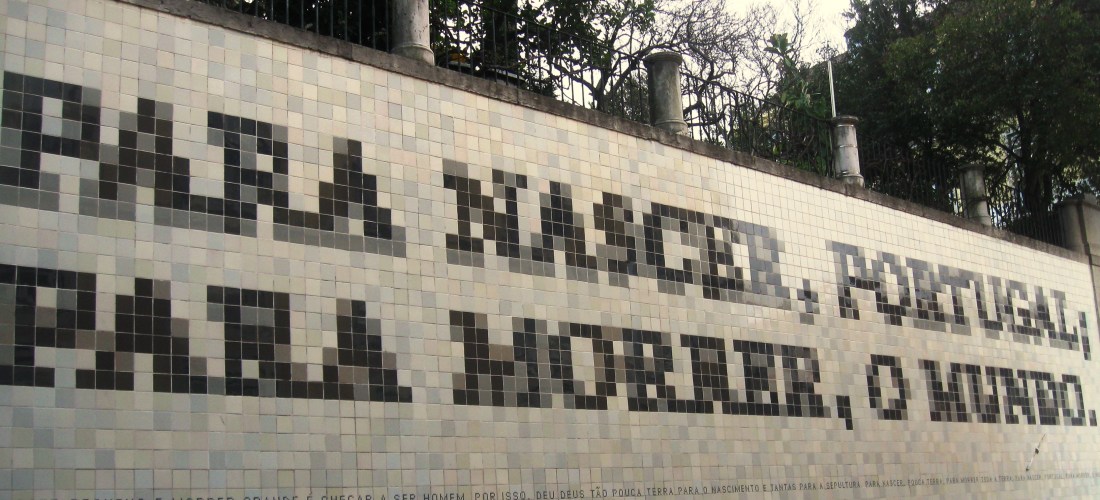
To create an amalgamate of these three topics I decided to show you some of my favourite Lisbon’s murals. The quote ‘Para nascer Portugal; para morrer o mundo’ is authored by Antonio Vieira, a Jesuit who shared his life between Portugal and Brazil and can be found written on a mural closely to Sé de Lisboa. Nowadays this quote has definitely another meaning. Given not only difficult economic circumstances, but also insatiated curiosity, there are millions of Portuguese spread all over the world. To me, this might be a reflection on a globalised reality, just as illustrating one’s craving to discover the world.
Milton Nascimento’s ‘Tudo o que você podia ser’ is an anthem for those, who are not afraid to change, to go beyond mainstream or to take difficult decisions. He underlines that the only obstacle on our way to become who we would love to be is fear. Recapitulating with another famous quote: the only thing we have to fear is fear itself.
Wiki:
Nascimento – birth (also, a surname of a famous Brazilian musician, Milton Nascimento)
‘Para nascer Portugal; para morrer o mundo’ – To be born in Portugal; to die in the world
Sé de Lisboa – Cathedral of Lisbon
‘Tudo o que você podia ser’ – ‘All you could become’ (a title of a famous Milton Nascimento’s song)

 LUSOFONETICA