“Faz um ano, faz, que eu tenho muita paz
Quase um ano tem, e tudo muito bem
E se eu não voltar, não vá se preocupar
Todo mundo tem direito de mudar
Que bandeira que você deu
Que bandeira, não me entendeu
Caretice tua chorar
De maneira aqui pra brigar (…)”
These lyrics, coming from Marcos Valle’s ‘Que bandeira’ classic tune are one of my all-time favourites. The essence for non-Portuguese speakers boils down to being free to live wherever you want, being the owner of your destiny, choosing your future regardless of your origin.
“(…) Eu não voltei
E eu não voltei porque agora eu sei
Naquele papel eu ia pro pinel
E se alguém disser que eu me desmontei
Sou dono de mim e faço o que quiser
Que bandeira que você deu
Que bandeira, não me entendeu
Caretice tua chorar
Caretice tua brigar (…)”
So it’s been almost one year in Berlin. It’s good to make a retrospective of what I planned to accomplish, and what I actually did. The most important thing is that I feel happy, although the fact is that I am very free to travel and re-visit my beloved places. I have also started gathering my learnings and thoughts on my paralel blog: Berlinering, where I describe my current experiences and soon will publish some sort of essence of my first year in Germany.
‘(…) Sigo te querendo, te cantando, procurando uma desculpa,
Te querendo mais.
Vou te cantando, te querendo, procurando uma desculpa,
Te cantando mais.
Sigo procurando uma desculpa, te querendo, te cantando,
Te querendo mais
Vou procurando uma cantada, te querendo, me desculpe,
Te cantando mais
Tou sabendo de você
Tou sabendo, podes crer!’
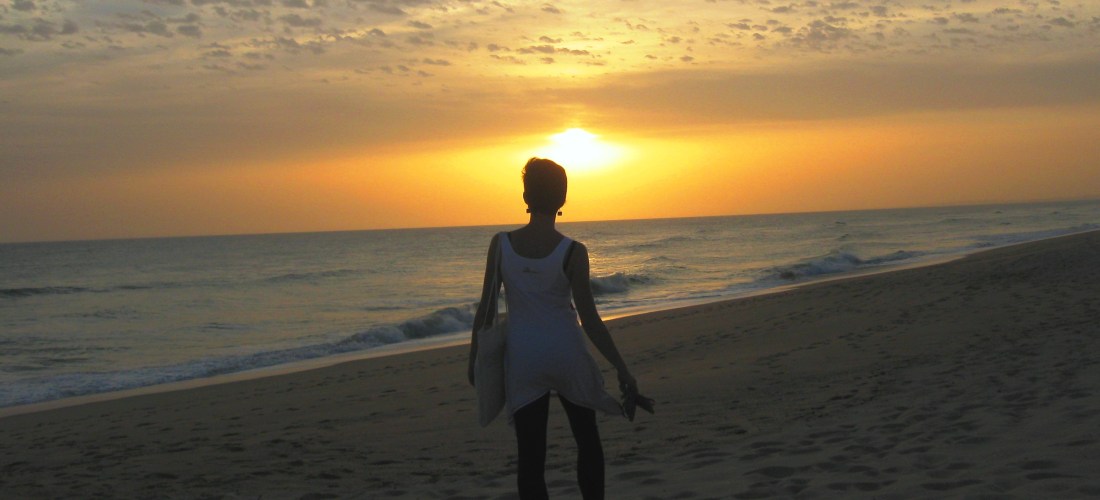
I still love the places I lived or been to (like this heavenly beach of Joaquina in Brazil pictured above), but I don’t long for them. I know that if I want to come back, I would, anytime. This is probably why I am so happy here, about the choice and opportunity, and not the necessity. Because everyone should be free to live wherever he/she wants to. I would love this to be valid for everyone, in this crazy world we live in…
After giving this idea some time, some shape – there it is, a project of describing my personal journey through the soundscapes : sounds and landscapes from the Portuguese-speaking countries. A project derived from years of collecting memories and experiences of living and travelling in Portugal and Brazil, mixed with saudade – impossible to translate state of longing to distant places and faces. Inspired by the people met on both sides of the Atlantic Ocean who helped me to realise that Portuguese is not only another language I speak, but also a state of mind closest to my heart/soul, balancing somewhere between euphoria and melancholia.
When did it all start? I cannot trace back my first memories, but probably back in the day, it was Walter Salles movies, followed by Wim Wender’s ‘Lisbon Story’ when I became only curious about Portuguese language – both its version from Portugal, as from Brazil. First one having very Eastern European-like pronounciation, and the second one sounding like its lazy and soft family member.
Then, when I was 15, I tried free capoeira workshops in a modern dance summer school and fell in love with these sounds for good. I gave up the physical aspect of it after some months not being able to defend myself properly in roda against more flexible members but the curiosity to understand the Afrobrasilian culture was stronger than my muscles. I learned by heart our fighting chants and tried to find translations and learn my DIY Portuguese.
At the same time my musical gurus: Jazzanova, Gilles Peterson, Rainer Truby and 4 Hero, to name a few, presented various compilations with Brazilian 60s and 70s music and their creative remixes. At that time travelling, even to Portugal, was still quite a snobbish idea in Poland with no cheap airlines and no-Schengen. My curiosity even lead me to a crazy idea to pass the Baccalaureate from Portuguese as a foreign language, but no high school offered such classes at that time (!).
I had to wait until 2007 when I was admitted for the Erasmus exchange programme and when I passed my first summer in Portugal in the rural part of Beira Alta as a volunteer in the archaeological Roman village. Since then I decided to learn Portuguese for real and thanks to my first teacher, Dr Sylwia, who gratefully agreed to my participation in the classes for Spanish Philology students during the following 2 years. I have to acknowledge that it gave me a possibility to learn all the grammatical bases and meet, still in Poznan, equally interesting, future linguists and travelers! (Yes, I do hope you will read it).
Since 2009 I have been travelling and living abroad, in Portugal and Brazil included. Although nowadays I am based in Barcelona, I have to admit that my pursuit for the Portuguese sound has broadened my horizons towards the Westbound world and marked visibly my Southern personality. I truly believe in the future of the South-West direction not only in terms of the economic potential, but also cultural and social heritage, still unknown in the EU and the US.
The idea of this blog is very personal and subjective, as is for the most of the blogs (not?). I am not a linguistic specialist, nor a musical guru, even if there are a few who claim so, but I am passionate about those two topics and I would like to invite you for a journey through sounds and stories from the Lusofonia. I would like to say thanks to my inspirational and supportive friends, always eager to ask about my Lusoexperience, to listen to Lusomusic at and eventually, strongly encouraging me to create Lusofonetica where I could create my notebook to share.
I will try to translate the Portuguese meanings at the bottom of the posts, but if some meanings will remain unclear, I strongly invite you to ask. As well as to participate, comment, and criticize in this Lusospace!
To illustrate my concept, I attach you the recording from Elis Regina’s ‘Meio de campo’, where she describes humbly the creative process, without pretending to be the master of masters:
Prezado amigo Afonsinho
Eu continuo aqui mesmo
Aperfeiçoando o imperfeito
Dando tempo, dando um jeito
Desprezando a perfeição
Que a perfeição é uma meta
Defendida pelo goleiro
Que joga na seleção
E eu não sou Pelé, nem nada
Se muito for eu sou um Tostão
Fazer um gol nesta partida não é fácil, meu irmão
Entrou de bola, e tudo!
Lusofonetica, a soundscape from the joyful to the melancholic, or as we would rather say in Portuguese, entre alegria e saudade.
Wiki:
Lusofonia – a Portuguese noun to describe the Portuguese-speaking countries and territories
fonetica – phonetics
jeito – manner, way
saudade – longing, yearning
meio de campo – in the middle of the field
roda – ring, circle of people
capoeira – is a Brazilian martial art that combines elements of dance, acrobatics and music, and is sometimes referred to as a game


 LUSOFONETICA