Premiere Brasil in Berlin

Music, Personal

So here I am, based in another city with Yellow Trams. Berlin is obviously very different than Lisbon or any other place I was placed during last couple of years, but I am falling in love with it for countless reasons. Firstly, for its cafes where you can spend literally whole days and nights (but who would in the end, where there is so much going on!). I noticed that for the Kaffee & Kuche offer, pasteis de nata are very much in fashion. Secondly, for its relaxed atmosphere. It definitely grew a serious competitor as ‘the-best-city-to-live’ for London and Paris, but it is unbelievably laid-back and casual comparing with those two. Somewhat it reminds me of Barcelona back in the good old days before it became so overtly commercialised, only the weather is… well, different!

Last but not least I am amazed with the diversity: not only between the neighbourhoods but also within its inhabitants. By the morning walk I took nearby the Spree River, I heard a woman singing this wonderful Brazilian classic… And until now I just can’t get it out of my mind.

The cultural programme is just overwhelming and I am already wondering when will I find enough time to visit all the places I want to!

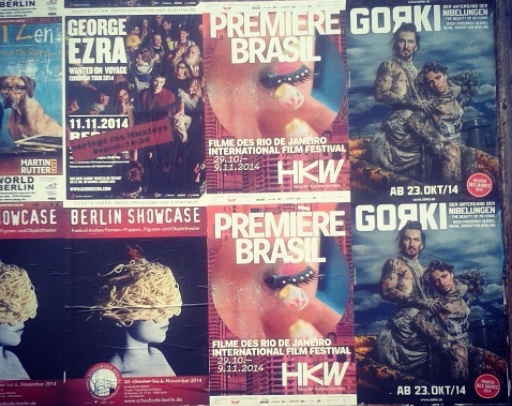
Speaking of which, there is a Brazilian Film Festival ‘Premiere Brasil’ in Haus der Kulturen der Welt starting off Wednesday 29th October. It presents last year’s best Brazilian productions and is prepared in the cooperation of the Rio de Janeiro International Film Festival. I am sure this one will be in the top 5 of my to-do-list for the forthcoming week!

Wiki:

Pasteis de nata – heavenly-tasting custard tart, the most famous to be found in a famous pasteleria de Belem aka Pasteis de Belem. Currently conquering the bakeries worldwide.

Blue Trains and Yellow Trams

Music, Personal, Travel

There is a song which stays on my mind during these busy times of change, entitled ‘O trem azul’. It tells a story about taking a metaphoric blue train whereas forgetting to tell something important and remembering things on the way. Incredibly melancholic, probably reflects my state of mind quite well. However happy and excited I feel about my relocation to Berlin, I simply cannot forget how much I love and will miss my friends from Barcelona which were so supportive during my difficult times and shared some of the best moments of my life.

This reminds me of the decision I took about coming back to Europe for good after extremely exciting and beautiful months in Brazil and Chile in 2011. Before, of leaving Poznan just after my graduation. Somewhere in between, coming and going to Spain and Portugal. But I have to say, the feeling of uncertainty of moving out and meeting new people is simply awesome and gives me such a boost of energy like anything else (OK, except from surfing maybe). The people will always stay with me and will determine of who I am.

When I was a kid, I loved talking to strangers while travelling on train. Some of them shared very interesting stories and during those couple of hours I could feel some sort of connection which was not always perceived during some other social gatherings occasions. I never understood why until I studied interpersonal relations at the university, but the feeling of connecting or not with a co-passenger stayed with me till today. Decision to continue the life journey only with those who contribute a real connection has not failed me. Due to the temporarily nature of my life and relations, I may not call all of them ‘close friends’ but I will never forget and label them rather as ‘significant’.

Be it Blue Trains, or Yellow Trams – the most well-known no. 28 in Lisbon or less-recognized one in Rio de Janeiro which passes over Arcos de Lapa (emblematic bridge in the Lapa neighbourhood, pictured above), remember it is all about the passengers.

Dia de Brasil em Barcelona

Music

New week (and weekend soon to come!), new plans… Sticking up to the Brazilian highlights in Barcelona, I have to mention the annual celebration of Dia de Brasil. Since 2009, each year it takes place sometime around the 2nd weekend of September at the Moll de la Marina (the one near Vila Olimpica). During this one-day free festival one can have a taste of the popular Brazilian contemporary culture: from capoeira, through gastronomy to different musical styles. A detailed programme of the event can be found on www.diadebrasil.es

This year there will be a parallel contemporary movies festival at the Cinemes Girona: http://www.diadebrasil.es/muestra-de-cine/

The tropical weather these days in Barcelona makes me think only about Jorge Ben’s classic and hope it will prevail until the next Sunday!

Be there or be square!

Bossalova: from passion to proficiency

Music

As the weekend is approaching again, let’s come back to the core of the Carioca music. Thanks to my musically-compatible friend Antonio (aka AdB) I had a pleasure to spend yesterday’s evening with quality bossanova sounds. This special Brazilian food for thought was served by Esteban Matuke, a Chilean-origin musician based in Barcelona for over 14 years (his interesting bio in Spanish can be found here http://www.matuke.net/).

Last night he performed in one of the most trendy BCN neighbourhoods of now: Sant Antoni. Artsy, yet very cozy bar ‘El Taller’ (‘Workshop’ in Catalan) hosted the guitar sounds of MatukeBossaLove project (https://www.facebook.com/Matukebossalove?fref=ts).

Matuke performed both bossanova classics and his own works. El Taller was filled with Brazilian music aficionados, mostly women though (interesting on how gender influence the genre’s preference?).

Having an occasion to speak with Matuke, we shared some observations on our inspirations. Himself, he discovered Gilberto’s music while his father recorded cassettes with Brazilian bossanova. Back in a day, Esteban could only play very simple guitar accords, but after some time and he could finally study on how to perform bossanova. It somewhat reminds me on my tough beginnings with Portuguese: from passion to proficiency.

Speaking of passion for music, yesterday I also had an opportunity to listen to AdB’s first mix performed with his newly acquired Traktor 2. AdB is one of very few people with whom I can speak about music all night (and day anyway) long, who always shares interesting music and concert discoveries with me and we understand each other without words on that topic. Although he is just starting his adventure with DJing, AdB is a very aware listener, so I do recommend to follow his inspirations: https://soundcloud.com/antonio-di-blasi

In the world which is growing yet more commercialized and globalized, music included, I feel very grateful to still have someone to speak in the same language. Good luck with your work, gentlemen!

Wiki:

Carioca – a nickname for the residents of Rio de Janeiro

On the other side of the Bridge: Costa Caparica

Music, Travel

The quantity of quality beaches nearby Lisbon, not to mention in Portugal, is overwhelming. You can have a glimpse of how it is like to wander around the country beach tasting/testing but the sites I will present here will maybe cover 1% of the total number.

Costa Caparica is probably the hippest beach in the Lisbon’s surrounding. The fact is, it is pretty much accessible, either by car, or by bus taken from the centre of Lisbon. Be aware if travelling during rush hours: the beach is situated on the other side of the Tejo river, and the famous Ponte de 25 de Abril at that times become rather a parking lot than an artery.

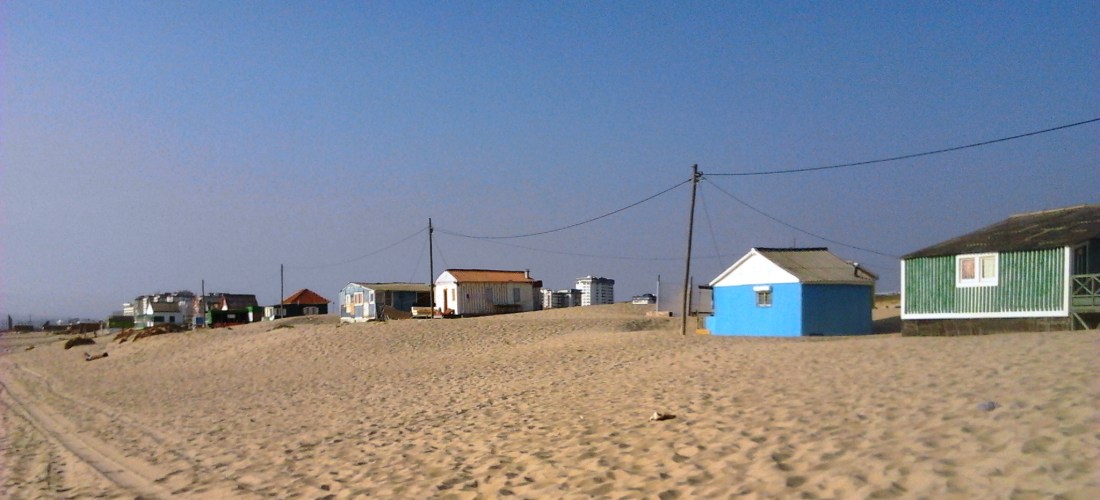
Once you get there, you will notice various beach bars and restaurants, varying from very posh to quite affordable ones. But what actually is my favourite remark of the Caparica beach is the quantity of surfing schools and little, wooden houses which endured wind, sun and high tides.

There is pretty much everything to be found on this wide beach: also a nudist and gay zone aka Praia 19. However, if you are looking for a rocky beach where to hide from the all-time present sun and humanity, Caparica may not be the best choice.

My personal fave is to sit nearby the wooden houses, listening to bossa nova classics overlooking the sunset and think about what memories I have left on the other side of the Atlantic Ocean. I think that what Principezinho meant by ‘looking at the sunsets’ while being melancholic, the Portuguese put nicely in one keyword: saudade.

Wiki:

Ponte de 25 de Abril – 25th of April Bridge, connecting the city of Lisbon with the municipality of Almada on the left (south) bank of the Tejo river. The name “25 de Abril” commemorates the Carnation Revolution.

Principezinho – The Little Prince of Saint-Exupery

Nascimento em Lisboa

Music, Personal

The idea behind this post lays partially in my current state of mind: being extremely busy, somewhere in between the unfinished stuff and the forthcoming events which will pretty much decide on how the next months/years of my life will look like. Partially, in one particular request for posting something related to Milton Nascimento’s work. Last but not least, in recent requests for writing something about Lisbon, as one of my friends currently is living there, working as a guide showing the city’s deepest secrets (Polish speakers are much welcome to visit her www.sekrety-lizbony.pl or Facebook Fan Page where she posts some hilarious photos from her favourite neighbourhood Alfama!), and another one is planning shortly a weekend get-away.

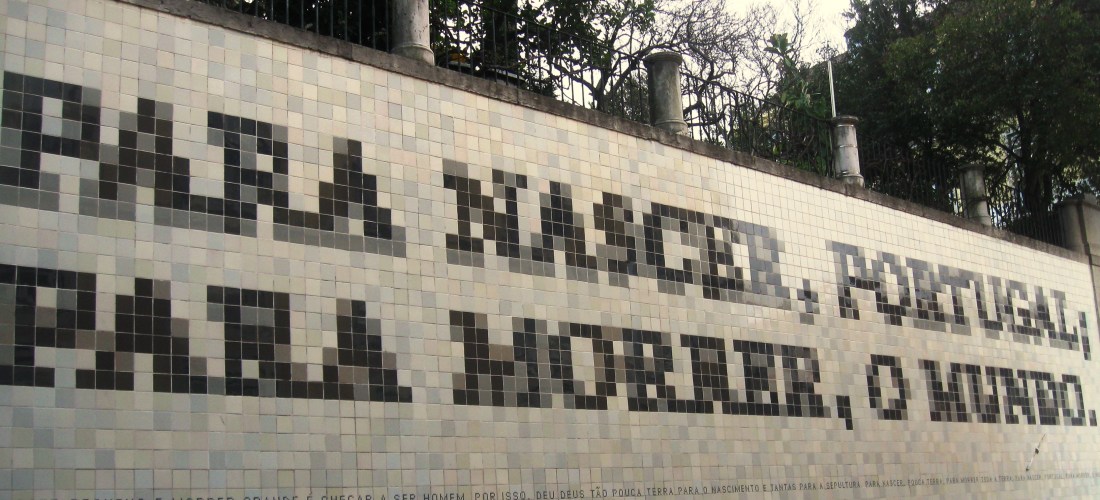
To create an amalgamate of these three topics I decided to show you some of my favourite Lisbon’s murals. The quote ‘Para nascer Portugal; para morrer o mundo’ is authored by Antonio Vieira, a Jesuit who shared his life between Portugal and Brazil and can be found written on a mural closely to Sé de Lisboa. Nowadays this quote has definitely another meaning. Given not only difficult economic circumstances, but also insatiated curiosity, there are millions of Portuguese spread all over the world. To me, this might be a reflection on a globalised reality, just as illustrating one’s craving to discover the world.

Milton Nascimento’s ‘Tudo o que você podia ser’ is an anthem for those, who are not afraid to change, to go beyond mainstream or to take difficult decisions. He underlines that the only obstacle on our way to become who we would love to be is fear. Recapitulating with another famous quote: the only thing we have to fear is fear itself.

Wiki:

Nascimento – birth (also, a surname of a famous Brazilian musician, Milton Nascimento)

‘Para nascer Portugal; para morrer o mundo’ – To be born in Portugal; to die in the world

Sé de Lisboa – Cathedral of Lisbon

‘Tudo o que você podia ser’ – ‘All you could become’ (a title of a famous Milton Nascimento’s song)

sudoeste

Além do mar

Music, Travel

Last days of summer in Europe simply ask for transmitting some uplifting and boogie beats. Fortunately, there are places on Earth, where summer is a state of mind, not just a season. As mentioned before this is the case in the North-Eastern Brazil, be it August or February. European places cannot a comparison to its tropical climate, but I remember some 50 degrees differences between my hometown in Poland and in the South of Portugal where I used to live during a couple of months (-25 vs. 25 Celsius degrees).

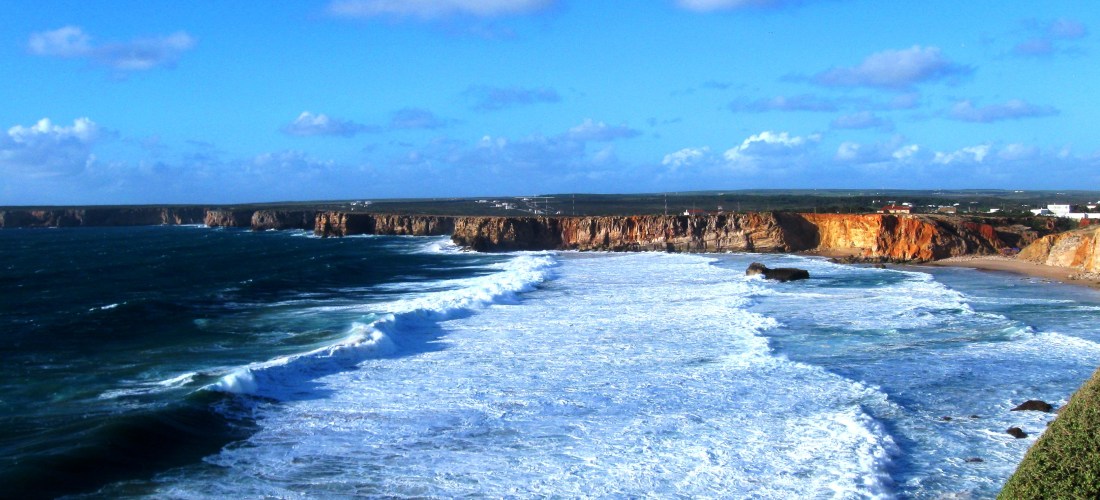
Algarve, as we speak, is the most popular region in Portugal among tourists and surfers, but apart from some horrendous towns famous for being actually nothing more than ‘Nordic colonies’ it is indeed a region famous for some best beaches in Europe. From my experience, I would definitely recommend one-of-its-kind islands nearby the rivalry towns Faro and Olhão (like the Ilha Deserta or Ilha do Farol) for those who love endless sand-scapes. On the other hand, beaches located nearby Sagres or Aljezur are amazingly rocky and the waves are the best for those who love to surf more than anything else. The windward site is still considered to be less affected by the massive tourism, and if you have enough time, visiting sites in the Sud Oeste Alentejano National Park is a brilliant idea. However, for bird-watching aficionados, like my friend Krzysztof (for Polish speakers I recommend his hillarious blog about ‘the ones that fly’ http://volucrescoeli.wordpress.com) the leeward coast would be a delight, due to various deltas and natural reservoirs of Ria Formosa National Park for flamingos and storks, to name very basic few. More about Algarve to come, yet to illustrate its sunny, sandy and summery wonders I chose one of my fave remixes of DJ Marky, about what’s beyond the sea.

Wiki:

Além do mar – beyond the sea (taken from the Djavan’s – Nereci, one of the Brazilian classic’s lyrics)

Ilha Deserta – Deserted Island

Ilha do Farol – Lighthouse Island

Alegria, alegria!

Music, Travel

Coming back from short holidays, I am quite puzzled if I really had to return to my usual urban life. Well, life is life – as one particularly insightful song told us in the 80s.

Thinking of some best moments of my life, I am normally reminiscing special people or places and this being especially helpful upon arrival to somewhat regular and down-to-earth reality. Undoubtedly, one of the moments of perfection I lived was in the North-Eastern tip of Brazil, on the outskirts of the city Natal, the capital of the Rio Grande do Norte region. Famous for its enormous dunes and never-ending, unspoiled beaches. Despite from becoming increasingly touristic destination, it has preserved most of its natural highlights.

I was lucky enough to rent an apartment on the Ponta Negra beach just at the tip of the Morro do Careca, the emblematic dune of the city. It used to be a lively spot for the locals in the past where they used hang out to sandsurf, but due to the risk of destroying the dune, the access has been lately cut off and the neighbourhood become surprisingly quiet.

These days, overlooking the sun or the moon in the Old Town port from my Barcelona loft, I often remember the magic nights of bathing in the Ocean, spotted by the moonlight, and burning torches from local beach bars where fresh caipirinha was completing the state of alegria. There are countless songs about this state of mind, but no one described it better than Gal Costa, in Pontos de Luz. Sun, the moon, the sky…

alegria – happiness

caipirinha – a popular Brazilian-origin cocktail, made of cachaça (sugar cane hard liquor), sugar and lime

pontos de luz – points of light

Sexta – feira da simpaticona!

Music, Personal

Sexta-feira, or ‘Sex’ as an abbreviation, means the 6th day of the week, Friday it is in Portuguese. I remember the confusion this word caused to my visitors when I was living in Portugal and they saw the ‘S’ word popping all of a sudden in the newspapers or TV weather programmes… This original name means that it is the sixth (sexta) day of a trade (feira), after the Jewish Sabbath (sabado). Actually from Monday till Friday the names of the week are referred in numbers, starting from Segunda-feira. To shorten this long description, on a daily basis you can rather hear/see in a spoken/written Portuguese: 2a – Monday, 3a – Tuesday, 4a – Wednesday, 5a – Thursday and 6a – Friday).

Anyway, hoje é sexta-feira de manhã, and I am preparing my short getaway to Ibiza to meet my lovely friends there. Looking forward not only to some entertainment, but also to reconnecting with nature and spending time at glorious beaches in the less-touristic parts of the island. This is why I keep listening this Jobim’s my all-time jazzy/bossanova/psychedelic fave about the beauty of Brazilian sertão, endangered nature and indigenous people.

However, as it is Friday in August 2014, I just cannot post this year’s revelation to Brazilian dancefloors, a funny track describing extremely nice type of a person at the party, aka simpaticona da boate. Basically, whatever you ask, simpaticona will give you!

Find below the original version (might be ‘too much’ imo) and intriguing DJ Marky’s remix.

Happy weekend (fds – fim de semana) is about to commence!

Wiki:

Sexta – feira (abbreviation ‘Sex’) – Friday

Hoje é sexta-feira de manhã – today is the Friday morning (lyrics taken from Jobim’s ‘Borzeguim’)

Sertão – rural inland area of Brazil

Simpaticona – (extremely) nice person

Boate – (Brazilian) party

Desfado

Music, Personal

‘I already knew you were a big fan of Portugal and Brazil but I never thought it was mostly language- and sound-related. It’s really nice to hear that Portuguese as this kind of power. I guess that fado it’s not your type of music but it seems unusual to talk about saudade without mentioning it’.

Well, hearing this kind of feedback I just cannot remain unresponsive! The author of the feedback is Joana with whom I had a pleasure to collaborate at my previous workplace last year in Barcelona. Even though it was always quite stressful and very fast-pace back there, we managed to create a very inspirational (and still, productive!) ambience on our ‘Fox Island team’ (don’t ask for a meaning) within the open space ocean. So, speaking a weird mixture of Spanish – English – French – Catalan – Polish – Lithuanian (!) and Russian we could not obviously miss Portuguese. And despite the fact that we are all in very different places now, I guess (?) we all feel this special kind of saudade when we remind those crazy times.

So, it is true, I have not started off with fado, as it is not really my cup of tea. However, it is something a Portugal-loving person cannot just leave behind. Promise there will appear some classic content (for which my Portuguese-aficionado Maezinha is longing, too!), sometime soonish.

For now I would love to present my fave out of Joana’s selection: Ana Moura’s Desfado which represents a powerful trend in fado music nowadays: remaking, experimenting with the form, musical styles and language. Desfado reminds me also of our multilingual team we used to be, desfalando all the afore-mentioned languages and simply, having fun!

Wiki:

Fado – a form of music characterized by mournful tunes and lyrics, often about the sea or the life in the neighbourhood, and infused with a characteristic sentiment of resignation, fatefulness and melancholia (loosely captured by the keyword saudade – longing). Desfado is a neologism meaning the opposite of it.

Falar – to speak (desfalando is the opposite gerund of it)

Maezinha – (diminuitive) mom